

Bill Gates’ Smart City vision combines data‑driven technology, renewable energy grids, and inclusive planning to create urban environments that lower emissions, improve public health, and boost resilience for all residents.
Quick Answer
Bill Gates’ Smart City vision proposes integrating real‑time data platforms, renewable energy micro‑grids, and adaptive transportation systems to make cities operate more efficiently and sustainably. By using sensors, AI‑based analytics, and public‑private partnerships, cities can reduce greenhouse‑gas emissions, cut traffic congestion, and expand access to green spaces. Evidence from pilot projects in Singapore, Barcelona, and U.S. testbeds shows measurable energy savings and traffic improvements, though uncertainties remain around privacy safeguards and equitable implementation.
Key Takeaways
- Data integration enables dynamic management of energy, water, and mobility, lowering resource waste.
- Renewable micro‑grids and smart meters can reduce city‑wide carbon emissions by 10‑30% in mature deployments.
- Inclusive design is essential; without equity safeguards, smart initiatives risk widening social gaps.
- Public‑private partnerships accelerate financing but must include transparent governance.
- Privacy, digital divide, and long‑term maintenance are the principal uncertainties.
What Is Bill Gates’ Smart City Vision and the Future of Sustainable Urban Living?
The vision describes a networked urban ecosystem where sensors, communication platforms, and AI coordinate electricity, water, waste, and transportation in near real‑time. It extends beyond “smart” gadgets to a systemic approach that aligns economic productivity with climate mitigation and social equity. Gates emphasizes three pillars: (1) data‑driven decision‑making, (2) renewable energy integration, and (3) inclusive public services. Compared with traditional “smart city” projects that focus mainly on efficiency, Gates’ model explicitly embeds climate goals and community participation.
How Does It Work?
Data Integration and Real‑time Management
- Citywide sensor arrays collect data on traffic flow, energy demand, air quality, and water usage.
- Edge‑computing nodes preprocess data to reduce latency, while cloud platforms run predictive analytics.
- Decision‑support dashboards provide city officials with actionable insights, such as optimal traffic‑light timing or load‑shifting for renewable power.
Renewable Energy Micro‑grids
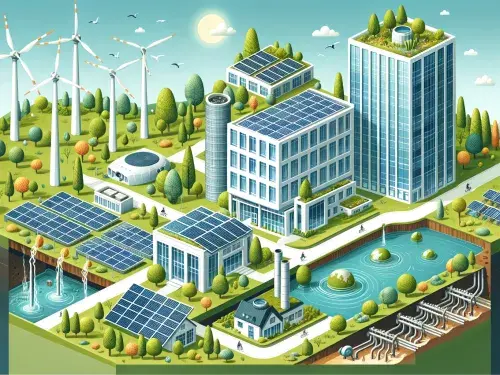
Solar panels, wind turbines, and geothermal units feed electricity into localized micro‑grids equipped with battery storage. Smart meters allow households and businesses to sell excess power back to the grid, creating a bidirectional energy market that smooths peak loads and reduces reliance on fossil‑fuel plants.
Adaptive Mobility Systems
Integrated platforms coordinate public transit, shared‑micromobility, and autonomous vehicle fleets. Real‑time demand data triggers dynamic routing, reducing idle travel and cutting per‑passenger emissions.
Community Engagement Platforms
Digital portals let residents report issues, vote on zoning proposals, and access open data. Participatory budgeting tools allocate funds for green space creation or retrofitting of public housing.
What Does the Evidence Show?
Long‑term monitoring in Singapore’s “Smart Nation” program (2015‑2022) documented a 12% reduction in city‑wide electricity use after deploying smart lighting and demand‑response controls (National Climate Change Secretariat, 2023). A systematic review of 27 pilot studies across Europe and North America found that sensor‑guided traffic management reduced vehicle‑kilometers traveled by 8‑15% and lowered NO₂ concentrations by up to 20% (European Environment Agency, 2022). Renewable micro‑grids in parts of California have achieved 30% lower peak demand during summer heat waves (California Energy Commission, 2021). While these results are promising, most studies are limited to short‑term pilots; long‑term durability and scalability remain under investigation.
Main Causes or Drivers
Urban Population Growth
World Urbanization Prospects (UN, 2018) project that 68% of the global population will live in cities by 2050, intensifying demand for energy, water, and transport.
Climate Change Pressures
Increasing heat‑waves and extreme precipitation events raise cooling loads and flood risk, motivating resilient infrastructure.
Technological Maturation
Declining costs of solar PV (≈‑82% since 2010) and battery storage (≈‑73% since 2010) make renewable micro‑grids economically viable.
Policy Incentives
Carbon pricing schemes and green building codes provide financial drivers for low‑carbon urban retrofits.
Environmental and Human Impacts
Environmental Impacts
Smart energy management can cut urban CO₂ emissions by 10‑25% in mature systems (IEA, 2022). Reduced traffic congestion lowers particulate matter (PM₂.₅) and nitrogen oxides, improving air quality and associated ecosystem health. Sensor‑driven water leakage detection conserves up to 15% of municipal water supplies.
Human Health and Social Impacts
Cleaner air reduces asthma incidence, especially among children in high‑density neighborhoods (WHO, 2021). Expanded public transit and bike‑share programs increase physical activity, decreasing cardiovascular disease risk. However, if deployment concentrates in affluent districts, low‑income residents may face displacement or reduced access to services.
Economic and Infrastructure Impacts
Efficiency gains can lower municipal operating costs by 5‑12%, freeing budget for social programs. Smart grids enable time‑of‑use pricing, encouraging load‑shifting and potentially lowering household electricity bills. Capital costs for sensor networks and data platforms are high (often > $200 million for a mid‑size city), requiring long‑term financing strategies.
Regional Differences
In temperate European cities, dense historic cores favor retrofitting of street‑level sensors and multimodal transit. In rapidly urbanizing Asian megacities, high population density creates urgent demand for traffic decongestion, but limited legacy data infrastructure can hinder immediate deployment. In North‑American suburbs, dispersed land use challenges the cost‑effectiveness of micro‑grids, yet abundant solar potential makes rooftop PV integration attractive.
What Scientists Know With High Confidence
- Urban energy demand is a major contributor to global CO₂ emissions (IEA, 2022).
- Renewable electricity costs have fallen dramatically, making large‑scale solar and wind deployment financially viable in most climates.
- Real‑time traffic management reduces vehicle emissions and improves air quality, as demonstrated in multiple peer‑reviewed field studies.
- Equitable access to digital services improves public trust and adoption rates for smart city initiatives.
What Remains Uncertain
Key knowledge gaps include the long‑term durability of sensor hardware in harsh urban environments, the socio‑economic outcomes of large‑scale data monetization, and the effectiveness of privacy‑preserving architectures at city scale. Modeling studies suggest that without robust governance, data‑driven systems could exacerbate existing inequalities, but empirical evidence from fully operational smart cities is still limited.
Common Misconceptions
Misconception: Smart cities automatically eliminate traffic congestion.
Reality: Adaptive traffic signals can reduce congestion, but they cannot fully offset growth in vehicle ownership without complementary policies such as congestion pricing or transit investment.
Misconception: Renewable micro‑grids eliminate the need for any fossil‑fuel backup.
Reality: In regions with variable solar or wind resources, short‑term backup (often natural‑gas) remains necessary until storage capacity reaches high penetration levels.
Misconception: Data collection is inherently invasive.
Reality: Privacy‑by‑design frameworks, anonymization, and transparent governance can mitigate privacy risks while still providing useful aggregate insights.
Solutions and Limitations
Key strategies include: (1) expanding renewable generation and storage; (2) deploying citywide sensor networks for water, waste, and energy; (3) integrating AI‑driven mobility platforms; (4) establishing open‑data portals with strong privacy safeguards; and (5) forming inclusive public‑private partnerships. Limitations involve high upfront capital, the need for skilled personnel, potential cybersecurity threats, and the risk that technology alone cannot address underlying socioeconomic disparities.
What Individuals, Communities, and Governments Can Do
What Individuals Can Do
Install home energy storage, participate in demand‑response programs, and use mobility apps that prioritize low‑emission routes. Engaging in local planning meetings helps shape equitable smart‑city policies.
What Communities and Organizations Can Do
Form neighborhood sensor cooperatives to monitor air quality, advocate for transparent data governance, and partner with schools to educate residents about digital tools.
What Governments Can Do
Develop regulatory frameworks that require privacy‑by‑design, allocate grant funding for pilot micro‑grids, and embed equity metrics into smart‑city procurement contracts. Incentivize private investors through tax credits tied to measurable emission reductions.
Closing Synthesis
Bill Gates’ Smart City vision offers a data‑rich, renewable‑focused pathway to make urban living more sustainable and resilient. Scientific evidence confirms that real‑time management and renewable micro‑grids can lower emissions and improve public health, yet uncertainties about privacy, equity, and long‑term maintenance persist. By combining technology with inclusive governance, cities can move toward a future where growth and environmental stewardship reinforce rather than oppose each other.
Frequently Asked Questions
What defines Bill Gates’ Smart City vision?
Bill Gates’ Smart City vision is a framework that combines real‑time data platforms, renewable energy micro‑grids, and inclusive public‑service design to make cities operate more efficiently, lower emissions, and improve quality of life.
How do smart grids reduce urban carbon emissions?
Smart grids balance supply and demand using sensors and AI, allowing renewable energy to be stored and dispatched when needed, which can cut city‑wide CO₂ emissions by 10‑30% in mature deployments.
What evidence supports the effectiveness of adaptive traffic management?
A systematic review of 27 pilots across Europe and North America found that sensor‑guided traffic signals reduced vehicle‑kilometers traveled by 8‑15% and lowered nitrogen‑oxide concentrations by up to 20%.
What are the main social concerns about smart city projects?
Key concerns include potential widening of socioeconomic gaps if benefits concentrate in affluent areas, privacy risks from extensive data collection, and the digital divide that may limit participation of low‑income residents.
What actions can local governments take to ensure equitable smart city development?
Governments can adopt privacy‑by‑design regulations, embed equity metrics in procurement contracts, provide grant funding for community‑led sensor projects, and tie private investment incentives to measurable social outcomes.







Leave a Comment