
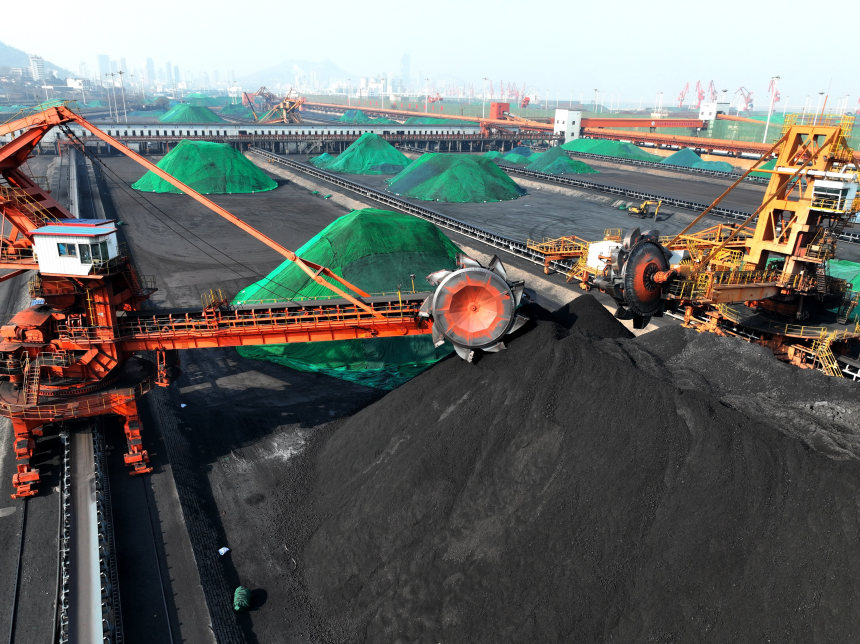
Australia Coal Exports Face New Restrictions From China
Australia’s coal trade with China is being reshaped by diplomatic tensions and climate policy, creating economic uncertainty and prompting a reassessment of environmental impacts and future strategies.
Quick Answer
New Chinese restrictions on Australian coal imports stem from a mix of geopolitical disputes and China’s stated goal to reduce carbon intensity. The limits affect both thermal coal used for power generation and metallurgical coal for steelmaking, lowering export volumes and pressuring Australian miners to diversify. While the exact duration of the measures remains uncertain, the broader trend aligns with global decarbonisation efforts, suggesting a longer‑term shift away from coal‑dependent trade.
Key Takeaways
- China has imposed limits on Australian thermal and metallurgical coal imports, citing both political and environmental reasons.
- The restrictions reduce Australia’s coal export revenue, which accounted for about 10% of national export earnings in 2022.
- Coal combustion contributes roughly 15% of Australia’s total greenhouse‑gas emissions, according to the Australian Government’s National Greenhouse Accounts.
- Both nations are investing in renewable energy, but coal remains a critical energy source for many Asian economies.
- Diversification, carbon‑capture technology, and stronger diplomatic engagement are key pathways for Australia to manage the transition.
What Is Australia Coal Exports Face New Restrictions From China?
The phrase refers to the recent policy actions by the People’s Republic of China that limit the quantity of Australian‑origin coal—both thermal coal for electricity and metallurgical coal for steel production—allowed into Chinese ports. Historically, China absorbed more than 30 million tonnes of Australian coal per year, making it the largest overseas market. The new restrictions are not a complete ban but a series of quota reductions, heightened customs scrutiny, and occasional temporary suspensions that emerged amid broader diplomatic friction.
How Does It Work?
1. Export Supply Chain
- Australian mines extract coal from basins such as the Bowen, Hunter, and Bowen‑Burrum.
- Coal is processed, stockpiled, and loaded onto bulk carriers at ports like Gladstone and Port Kembla.
- Shipping routes cross the Pacific and Indian Oceans to Chinese terminals in Guangdong, Shandong, and Zhejiang.
2. Trade Restrictions Mechanism
- Chinese customs impose stricter import licensing, requiring additional documentation for Australian shipments.
- Quota caps are set on the total tonnes permissible per quarter, with penalties for excess.
- Inspection procedures can delay vessel berthing, increasing demurrage costs for exporters.
3. Environmental Feedback Loop
- Reduced coal imports lower the amount of CO₂ emitted during coal combustion in China, supporting its pledge to peak emissions before 2030.
- Australia experiences a short‑term drop in coal‑related emissions from mining activity due to lower production incentives.
- Both economies may accelerate investment in renewable energy, battery storage, and hydrogen projects to offset the lost coal supply.
What Does the Evidence Show?
Long‑term monitoring by the International Energy Agency (IEA) indicates that coal’s share of global electricity generation fell from 38% in 2010 to 34% in 2022, reflecting a gradual transition toward lower‑carbon sources. A 2023 assessment by the Australian Government’s Department of Industry, Science and Resources reported that coal exports to China declined by 22% in the first half of 2023 compared with the same period in 2022, directly linked to the new import limits.
Peer‑reviewed studies on carbon‑capture and storage (CCS) at Australian coal mines suggest that CCS could reduce lifecycle emissions by up to 90% under optimal conditions, but commercial deployment remains limited due to high capital costs (International Energy Agency, 2022).
Main Causes or Drivers
Direct Causes
- Diplomatic disputes over trade practices, human‑rights concerns, and accusations of foreign interference.
- China’s policy to lower the carbon intensity of its energy mix, as outlined in its 14th Five‑Year Plan.
Underlying Drivers
- Global decarbonisation momentum, driven by the Intergovernmental Panel on Climate Change (IPCC) scenario pathways that limit coal use to meet the Paris Agreement goals.
- Australia’s economic reliance on minerals exports, creating a structural vulnerability when a single market imposes restrictions.
Environmental and Human Impacts
Environmental Impacts
- Coal mining releases methane, a potent greenhouse gas, and can degrade water quality through acid mine drainage.
- Combustion of exported coal contributes to air‑pollutant emissions (SO₂, NOₓ, particulate matter) that affect regional air quality in China.
- Reduced coal shipments temporarily lower global coal‑related CO₂ emissions, though the net effect depends on whether China replaces the shortfall with other fossil fuels.
Human Health and Social Impacts
- Australian mining communities face job insecurity; the sector employed roughly 70,000 workers in 2022.
- Chinese coal‑fired power plants are linked to respiratory illnesses; limiting high‑carbon coal can improve public‑health outcomes.
- Indigenous groups near mining sites may experience cultural and environmental disruptions from expanded extraction activities.
Economic and Infrastructure Impacts
- Export revenue fell by an estimated AU$4 billion in 2023, pressuring regional economies dependent on port infrastructure.
- Port operators face lower utilization rates, affecting logistics chains and ancillary services.
- Investors are re‑evaluating the financial viability of new coal projects, leading to a slowdown in capital spending.
Regional Differences
In eastern Australia, where the majority of coal ports are located, the restrictions have caused noticeable declines in freight traffic and local employment. In contrast, western states such as Western Australia, which export more iron ore than coal, have felt less direct impact. In China, coastal provinces that historically imported Australian coal, such as Guangdong and Shandong, are accelerating the shift to domestic or alternative imports (e.g., from Indonesia) and increasing renewable‑energy capacity.
What Scientists Know With High Confidence
What Scientists Know With High Confidence
- Coal combustion is a major source of CO₂, contributing roughly 15% of global anthropogenic emissions.
- Reducing coal use is essential to limit global warming to 1.5 °C above pre‑industrial levels, as outlined by the IPCC.
- China’s energy system remains heavily coal‑dependent; in 2022, coal accounted for about 57% of its primary energy consumption.
- Geopolitical trade measures can rapidly alter commodity flows, as demonstrated by the 2020–2021 Australian‑Chinese trade tensions.
What Remains Uncertain
What Remains Uncertain
Key uncertainties include the duration and exact quota levels of China’s restrictions, the speed at which Chinese power plants can replace Australian coal with lower‑carbon alternatives, and the commercial viability of large‑scale carbon‑capture projects at Australian mines. Data gaps in real‑time monitoring of coal‑related emissions during the transition also limit precise quantification of climate benefits.
Common Misconceptions
Common Misconceptions
Misconception: The restrictions constitute a permanent ban on Australian coal.
Reality: China has imposed quotas and stricter licensing, not an outright prohibition. The measures can be adjusted based on diplomatic negotiations and domestic energy needs.
Misconception: All Australian coal is equally harmful.
Reality: Thermal coal and metallurgical coal have different combustion profiles and end‑uses; metallurgical coal is essential for steelmaking and currently has fewer low‑carbon alternatives.
Misconception: Reducing Australian coal exports will automatically solve China’s air‑quality problems.
Reality: While import reductions can lower emissions, China may substitute with coal from other suppliers or increase natural‑gas use, which also carries environmental footprints.
Solutions and Limitations
Several response strategies are under discussion:
- Diversification of Export Markets: Targeting emerging economies such as India or Southeast Asian nations can offset Chinese demand, but market competition and differing environmental standards pose challenges.
- Carbon‑Capture and Storage (CCS): Deploying CCS at major mines could allow continued export with reduced lifecycle emissions; however, high upfront costs and uncertain long‑term storage security limit rapid rollout.
- Investment in Renewable Energy: Expanding solar and wind farms in coal‑producing regions can provide alternative employment and energy for local grids, yet intermittency and transmission infrastructure require substantial investment.
- Policy and Diplomatic Engagement: Bilateral talks focused on trade fairness and joint climate initiatives could ease restrictions, but political will on both sides fluctuates.
- Regulatory Standards: Strengthening environmental regulations for mine reclamation can mitigate local ecological damage, but stricter rules may increase operating costs and reduce competitiveness.
What Individuals, Communities, and Governments Can Do
What Individuals Can Do
- Support renewable‑energy projects through community‑owned solar or wind schemes.
- Advocate for transparent reporting of coal‑related emissions by local councils.
- Engage in public consultations on mining licences and land‑use planning.
What Communities and Organizations Can Do
- Develop workforce‑transition programs that retrain coal‑sector workers for jobs in clean‑energy industries.
- Partner with research institutions to pilot CCS or hydrogen‑blending projects.
- Monitor water quality near mining sites and report breaches to regulators.
What Governments Can Do
- Provide fiscal incentives for renewable‑energy deployment in coal‑dependent regions.
- Negotiate trade agreements that incorporate climate‑compatible clauses, reducing the risk of abrupt restrictions.
- Fund independent monitoring of greenhouse‑gas emissions from mining and export activities.
- Facilitate public‑private partnerships for CCS research and demonstration plants.
Closing Synthesis
The new Chinese restrictions on Australian coal exports illustrate how geopolitical dynamics intersect with climate‑policy goals. High‑confidence science confirms that coal remains a major source of global emissions, and reducing its use aligns with decarbonisation pathways. Yet uncertainties about policy duration, market alternatives, and technology adoption mean the transition will be gradual and regionally uneven. By diversifying markets, investing in carbon‑capture, expanding renewables, and fostering diplomatic dialogue, Australia can mitigate economic disruption while contributing to a lower‑carbon future.
Frequently Asked Questions
Why has China imposed new restrictions on Australian coal imports?
China’s restrictions arise from a combination of diplomatic tensions with Australia and its own policy goal to lower carbon intensity, which includes limiting high‑carbon coal imports.
How do the restrictions affect Australia’s economy?
The limits reduce export revenue—about AU$4 billion in 2023—impacting mining jobs, port activity, and regional economies that depend heavily on coal trade.
What environmental benefits could result from reduced Australian coal shipments to China?
Lower coal imports can decrease CO₂ and air‑pollutant emissions from Chinese power plants, offering modest climate and public‑health gains, though the net effect depends on what fuels replace the coal.
Can carbon‑capture and storage (CCS) allow continued coal exports with lower emissions?
CCS can cut lifecycle emissions by up to 90% in ideal conditions, but high costs, limited commercial projects, and storage security concerns mean it is not a near‑term universal solution.
What actions can Australian communities take to adapt to the trade restrictions?
Communities can develop workforce‑transition programs, support local renewable‑energy projects, and monitor environmental impacts of mining to ensure a smoother shift away from coal dependence.





Leave a Comment