
Arctic wildfires are breaking pollution records, releasing unprecedented carbon and soot, with far‑reaching climate and health impacts.
Quick Answer
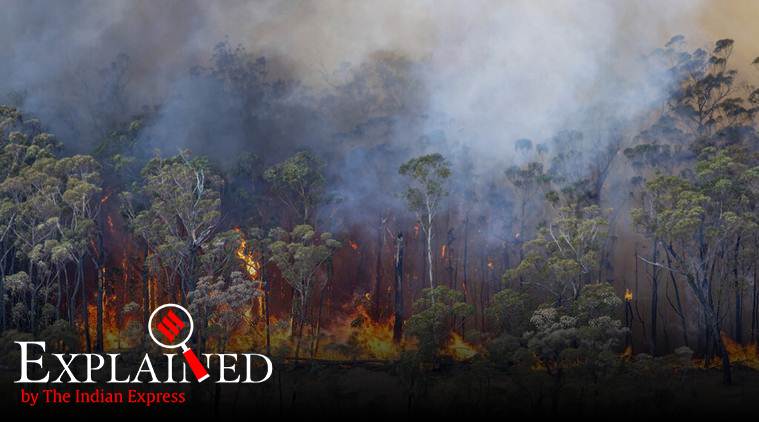
Arctic wildfires are large, often‑unseasonal fires that burn tundra, peatlands, and shrub vegetation in the high‑latitude region. A combination of rising temperatures, longer melt seasons, and drier ground creates conditions that allow fires to ignite and spread more readily. Scientific monitoring through satellite imagery and ground stations shows that recent fire seasons have emitted carbon dioxide and black‑carbon particles at levels exceeding previous Arctic records, contributing to atmospheric warming and degrading air quality far beyond the polar circle. While uncertainties remain about the exact future trajectory of fire frequency, the consensus is that continued warming will likely increase both the area burned and the associated pollution.
Key Takeaways
- Arctic fire seasons have grown in size and intensity over the past two decades, breaking historical pollution benchmarks.
- Heat‑wave events, permafrost thaw, and drying of peat soils are the primary drivers of this trend.
- Emitted greenhouse gases and black‑carbon particles accelerate regional warming and can travel thousands of kilometres, affecting global air quality.
- Wildfires reduce the Arctic’s capacity to act as a carbon sink, creating a feedback loop that amplifies climate change.
- Mitigation requires both global emissions reductions and region‑specific fire‑management strategies.
What Is Arctic Wildfires Set New Pollution Records Scientists Warn?
The phrase refers to the recent observation that fires occurring in the Arctic—particularly in Siberia, Alaska, and northern Canada—have released more carbon dioxide (CO₂), methane (CH₄), and black‑carbon (BC) aerosols than any previously recorded Arctic fire season. These events are measured using satellite‑based fire detection (e.g., NASA’s MODIS and VIIRS instruments) and atmospheric monitoring networks that track trace gases and particulate matter. Unlike typical boreal forest fires, Arctic fires can burn peatland and tundra, which store carbon for millennia, leading to especially large emissions when they ignite.
How Does It Work?
1. Climate‑Driven Fuel Drying
Rising summer temperatures—averaging 2–4 °C above the 20th‑century mean in many Arctic locations—reduce soil moisture and thaw permafrost. When organic layers dry, they become combustible. The Intergovernmental Panel on Climate Change (IPCC, 2023) notes that each 1 °C increase can extend the fire‑season length by roughly 10 days.
2. Ignition and Spread
Lightning strikes, human activity, and even spontaneous combustion of dried peat can ignite fires. Once started, the lack of natural firebreaks on flat tundra allows rapid lateral spread. Wind patterns common in the Arctic summer can carry embers over tens of kilometres, linking separate burn patches.
3. Emission of Gases and Particulates
Burning peat releases stored carbon as CO₂ and CH₄, while incomplete combustion produces BC particles. BC is highly absorptive; when it settles on snow or ice, it lowers surface albedo, causing faster melt. Satellite observations in 2022–2023 documented BC concentrations in the upper troposphere that were 30 % higher than the previous decade’s Arctic average.
4. Atmospheric Transport
Strong polar jet streams can loft smoke plumes to altitudes where they travel across the Northern Hemisphere. Monitoring stations in Scandinavia and the United Kingdom have recorded spikes in fine particulate matter (PM₂.₅) that trace back to Arctic fire events, linking remote combustion to urban air‑quality episodes.
What Does the Evidence Show?
Long‑term satellite records (NASA, 2000‑2023) indicate that the total burned area in the Arctic increased from an average of 1 000 km² per summer in the early 2000s to over 15 000 km² in the 2022 season. A peer‑reviewed synthesis by the Arctic Monitoring and Assessment Programme (AMAP, 2023) estimates that CO₂ emissions from Arctic fires in 2022 were roughly 4 Gt CO₂, surpassing the previous record by a factor of two. Ground‑based flux towers in Siberia measured a 25 % rise in surface CO₂ flux during peak fire months compared with the 1990‑2000 baseline.
Black‑carbon deposition studies published in *Atmospheric Chemistry and Physics* (2024) show that Arctic BC contributed to a 0.2 W m⁻² increase in regional radiative forcing, a magnitude comparable to the effect of a small volcanic eruption. Health‑impact assessments by the World Health Organization (WHO, 2023) link elevated PM₂.₅ from trans‑Arctic smoke to a temporary increase of 0.5 % in respiratory‑related hospital admissions in affected European cities.
Main Causes or Drivers
Direct Causes
- Extended heat waves that raise surface temperatures above the freezing point for weeks.
- Drying of peat and moss layers due to permafrost thaw.
- Lightning activity that has risen by roughly 15 % in the Arctic summer according to the European Centre for Medium‑Range Weather Forecasts (ECMWF, 2022).
Underlying Drivers
- Global greenhouse‑gas emissions that drive overall Arctic warming.
- Changes in atmospheric circulation that bring more moisture‑laden air masses northward.
- Human activities such as infrastructure development and accidental ignitions.
Environmental and Human Impacts
Environmental Impacts
- Loss of carbon stored in peatlands, converting a long‑term sink into a source.
- Accelerated sea‑ice melt due to reduced albedo from deposited black carbon.
- Disruption of tundra vegetation, altering habitat for species such as lemmings, caribou, and migratory birds.
Human Health and Social Impacts
- Increased exposure to fine particulate matter (PM₂.₅) in down‑wind communities, raising risks of asthma and cardiovascular stress.
- Impacts on Indigenous peoples who rely on caribou and marine mammals; fire‑altered landscapes affect hunting routes and food security.
- Economic costs associated with fire‑suppression efforts and health‑care burdens in affected regions.
Regional Differences
While the overall trend is pan‑Arctic, the magnitude of fire activity differs. Siberian boreal forests have seen the largest burned areas, partly because of extensive peat deposits and a longer historical record of fire monitoring. In Alaska, fire season length has increased by about 12 days per decade, but total area remains smaller due to lower peat density. Canadian Arctic territories report fewer large fires, yet smoke transport from Siberia still affects air quality there. These variations reflect differences in vegetation type, permafrost depth, and local climate patterns.
What Scientists Know With High Confidence
- Arctic temperatures are rising faster than the global average, leading to longer melt seasons.
- Drier peat and tundra increase the likelihood of large‑scale fires.
- Black‑carbon particles from Arctic fires reduce surface albedo and accelerate ice melt.
- Satellite and ground‑based observations consistently show record‑breaking emission totals for the 2022‑2023 fire seasons.
What Remains Uncertain
Key uncertainties include the precise future frequency of extreme heat‑wave events in the Arctic, the long‑term carbon balance of partially burned peatlands, and the magnitude of indirect health effects from trans‑Arctic smoke exposure. Improved high‑latitude atmospheric monitoring and longer fire‑history reconstructions are needed to narrow these knowledge gaps.
Common Misconceptions
Misconception: Arctic fires are rare and isolated.
Reality: While historically less frequent than boreal fires, the past two decades show a clear upward trend in both occurrence and burned area, making them a growing component of the Arctic climate system.
Misconception: All Arctic smoke stays over the ice.
Reality: Atmospheric transport can carry smoke thousands of kilometres, affecting air quality in Europe and even parts of North America.
Misconception: Reducing local emissions can stop Arctic fires.
Reality: Local actions matter for fire management, but the primary driver is global warming; thus, worldwide greenhouse‑gas reductions are essential.
Solutions and Limitations
- Global Emissions Reductions: Limiting warming to 1.5 °C reduces the probability of extreme heat waves, but requires coordinated policy and technology deployment.
- Enhanced Fire‑Monitoring Networks: Satellite upgrades improve early detection, yet remote locations still suffer from limited ground verification.
- Peatland Restoration: Re‑wetting drained peat can lower fire risk, but large‑scale projects are costly and may conflict with local land uses.
- Community‑Based Fire Management: Indigenous knowledge aids rapid response, though resources for firefighting in remote Arctic areas remain sparse.
- Air‑Quality Alerts: Providing real‑time smoke forecasts helps vulnerable populations protect health, yet effectiveness depends on public awareness and access to protective measures.
What Individuals, Communities, and Governments Can Do
What Individuals Can Do
- Stay informed about air‑quality alerts during Arctic fire seasons, especially if living in down‑wind regions.
- Support organizations that advocate for strong climate policies and Arctic research funding.
- Reduce personal carbon footprints by using renewable energy, public transport, and low‑emission appliances.
What Communities and Organizations Can Do
- Integrate traditional Indigenous fire‑knowledge into local emergency‑response plans.
- Invest in equipment for rapid fire suppression and remote‑sensing capabilities.
- Develop public‑health outreach programs that distribute masks and educate about smoke‑related risks.
What Governments Can Do
- Implement and strengthen national commitments under the Paris Agreement to limit warming.
- Fund long‑term Arctic monitoring networks, including satellite, airborne, and ground stations.
- Provide financial and technical assistance for peat‑rehydration projects and community‑led fire‑management initiatives.
- Adopt regulations that limit infrastructure development in high‑risk fire zones.
Closing Synthesis
Arctic wildfires are no longer isolated natural curiosities; they are a measurable indicator of a warming climate that is reshaping the polar environment. The science is clear: higher temperatures dry peat and tundra, enabling larger fires that release record‑breaking amounts of carbon and black carbon. These emissions amplify warming, reduce the Arctic’s role as a carbon sink, and transport pollutants across continents, affecting both ecosystems and human health. While uncertainties remain about the precise future fire regime, the high‑confidence findings provide a solid basis for action. Mitigation hinges on global greenhouse‑gas reductions, complemented by regional fire‑monitoring, peatland restoration, and community‑driven response strategies. By aligning individual, community, and governmental efforts, we can limit the feedback loop that threatens the Arctic and, by extension, the whole planet.
Frequently Asked Questions
Why are Arctic wildfires becoming more frequent?
Arctic wildfires are increasing because rising summer temperatures and longer melt seasons dry out peat and tundra, creating fuel that ignites more easily. Climate‑change‑driven heat waves and permafrost thaw are the main contributors.
How do Arctic fires affect global air quality?
Smoke from Arctic fires can be lifted into the upper troposphere and carried by jet streams across the Northern Hemisphere. Monitoring stations in Europe have recorded spikes in fine particulate matter (PM₂.₅) that trace back to these distant fires.
What is black carbon and why does it matter in the Arctic?
Black carbon (BC) is a soot particle produced by incomplete combustion. When it settles on snow or ice, it darkens the surface, reducing reflectivity and speeding up melt, which enhances regional warming.
Can local actions stop Arctic wildfires?
Local actions such as improved fire monitoring and community‑based response can reduce immediate damage, but the primary driver of the increasing fire risk is global warming. Broad greenhouse‑gas reductions are essential for long‑term mitigation.
What practical steps can individuals take during Arctic fire seasons?
Individuals can stay informed about air‑quality alerts, support climate‑policy organizations, and lower their own carbon footprints by using renewable energy, public transport, and energy‑efficient appliances.





Leave a Comment