
Amazon rainforest deforestation is the large‑scale conversion of forest to other land uses, a process that reduces biodiversity, releases carbon, and threatens Indigenous peoples, making it a critical global environmental issue.
Quick Answer
Deforestation in the Amazon refers to the permanent removal of native forest cover for activities such as cattle ranching, soy cultivation, mining, and infrastructure development. The process cuts trees that act as a carbon sink, releases stored CO₂, and fragments habitats. Scientific assessments indicate that forest loss contributes roughly 15 % of global anthropogenic greenhouse‑gas emissions, although exact percentages vary by methodology. The most immediate impact is accelerated climate change and biodiversity loss, while uncertainty remains around tipping‑point thresholds that could shift the forest from a net carbon sink to a net source.
Key Takeaways
- The Amazon lost an area larger than France between 1970 and 2020, averaging about 1.5 acres per minute of forest loss.
- Agricultural expansion, especially cattle and soy, accounts for roughly 70 % of direct deforestation drivers.
- Deforestation reduces the basin’s carbon‑sequestration capacity and is linked to about 15 % of global CO₂ emissions.
- Indigenous territories experience lower deforestation rates, highlighting the protective role of traditional stewardship.
- Remote‑sensing technologies now detect illegal clearing within hours, improving monitoring and enforcement.
- Payment‑for‑ecosystem‑services schemes and sustainable supply‑chain certifications can offset some economic incentives for clearing.
What Is Amazon Rainforest Deforestation Facts Everyone Should Know?
Deforestation describes the conversion of forested land to non‑forest uses that persist for decades or longer. In the Amazon, this includes clearing for pasture, soybeans, timber extraction, mining, road building, and urban expansion. The term differs from natural forest disturbance (e.g., fire, storms) because it is driven primarily by human decisions and is usually irreversible on human timescales. Understanding the facts—extent, drivers, impacts, and evidence—helps gauge the urgency of conservation and policy action.
How Does It Work?
1. Land‑use Change Initiation
Landowners or corporations obtain legal or informal permission to clear forest, often motivated by market demand for beef, soy, or timber. Clear‑cutting removes the canopy, exposing soil to sunlight.
2. Soil and Microclimate Alteration
Without shade, soil temperature rises and moisture evaporates faster, reducing fertility. This feedback discourages natural regeneration and favors pasture grasses.
3. Carbon Release
Each hectare of mature rainforest stores roughly 150 t of carbon. When trees are felled and burned or left to decay, the carbon is released as CO₂, contributing to atmospheric greenhouse gases.
4. Habitat Fragmentation
Roads and cleared patches isolate wildlife populations, increasing edge effects, reducing genetic flow, and raising extinction risk for many species.
5. Feedback to Climate
Reduced evapotranspiration diminishes regional rainfall, potentially creating a dry‑feedback loop that accelerates further forest loss.
What Does the Evidence Show?
Long‑term satellite records from NASA’s Landsat program (1972‑2022) document a cumulative loss of about 750,000 km² of forest, equivalent to the area of France. The Intergovernmental Panel on Climate Change (IPCC) AR6 (2021) cites multiple peer‑reviewed studies that estimate Amazon deforestation contributes 12‑15 % of global anthropogenic CO₂ emissions. A 2020 systematic review in *Global Change Biology* found that protected Indigenous lands experience deforestation rates up to 80 % lower than adjacent non‑protected areas, underscoring the protective effect of traditional stewardship. Field surveys across the basin consistently report declines in bird, amphibian, and mammal diversity proportional to forest loss, with meta‑analyses indicating a 0.5 % species loss per 1 % reduction in forest cover.
Main Causes or Drivers
Direct Causes
- Agricultural expansion: Cattle ranching accounts for ~55 % of cleared area; soy cultivation adds ~15 %.
- Logging: Both legal and illegal timber extraction creates roads that open forest to further clearing.
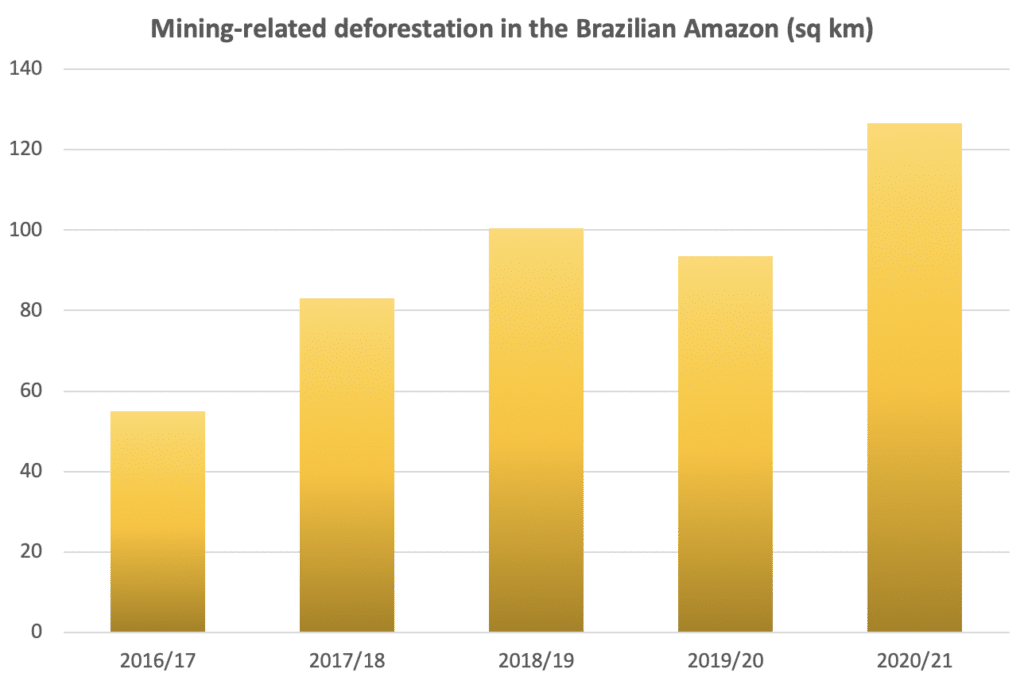
- Mining: Gold and other mineral extraction often involve large‑scale clearing and river contamination.
- Infrastructure: Highway projects (e.g., BR‑163) facilitate market access and settlement.
Underlying Drivers
- Global demand for beef and soy protein.
- Commodity price volatility that incentivizes rapid land conversion.
- Weak enforcement of environmental regulations and land‑tenure insecurity.
- Fiscal policies that subsidize agriculture or overlook ecosystem services.
Environmental and Human Impacts
Environmental Impacts
Deforestation reduces the basin’s carbon sink capacity, alters the hydrological cycle, and fragments habitats. Loss of canopy cover diminishes regional precipitation, potentially shifting parts of the basin toward savanna conditions. Species extinction risk escalates; the IUCN reports that over 20 % of Amazonian vertebrates are now classified as threatened.
Human Health and Social Impacts
Air quality worsens from smoke and particulate matter, increasing respiratory illness in nearby communities. Mercury used in gold mining contaminates fish, posing neurological risks to Indigenous peoples who rely on river protein. Displacement of Indigenous groups erodes cultural heritage and undermines traditional land‑management knowledge.
Economic and Infrastructure Impacts
While agriculture generates short‑term revenue, long‑term soil degradation can reduce productivity. Flooding frequency may increase as forest cover declines, threatening roads and urban settlements downstream.
Regional Differences
Deforestation intensity varies across the nine Amazonian countries. Brazil accounts for roughly 80 % of total loss, driven largely by cattle ranching in the states of Mato Grosso and Pará. In contrast, Bolivia and Colombia exhibit lower rates, with a higher proportion of forest loss occurring in mining zones. The western Amazon (e.g., Peru, Ecuador) retains larger contiguous forest blocks, partly because rugged terrain limits large‑scale agriculture. These patterns reflect differences in land‑use policies, enforcement capacity, and economic incentives.
What Scientists Know With High Confidence
- The Amazon stores more than 100 billion metric tons of carbon, making it a critical global carbon reservoir.
- Deforestation directly contributes a measurable share (≈12‑15 %) of global anthropogenic CO₂ emissions.
- Indigenous‑managed lands experience significantly lower deforestation rates than adjacent non‑protected areas.
- Loss of forest cover reduces regional rainfall through decreased evapotranspiration.
What Remains Uncertain
Key uncertainties include the precise tipping point at which the Amazon could transition from a net carbon sink to a net source, the long‑term resilience of biodiversity under fragmented landscapes, and the effectiveness of emerging payment‑for‑ecosystem‑services schemes at scale. Data gaps in remote regions, limited monitoring of illegal mining, and variability in socio‑economic models also constrain predictive confidence.
Common Misconceptions
Misconception: Deforestation only affects wildlife.
Reality: Human communities experience direct health impacts from smoke, water contamination, and loss of livelihoods, making deforestation both an ecological and social issue.
Misconception: All Amazon deforestation is illegal.
Reality: A substantial portion occurs under legal land‑use permits for agriculture and mining, though enforcement of environmental safeguards is often weak.
Misconception: Replanting a few trees can offset large‑scale loss.
Reality: Mature rainforest ecosystems store carbon over centuries; young plantations lack biodiversity and take decades to approach comparable carbon stocks.
Misconception: The Amazon will recover on its own if deforestation stops.
Reality: Soil degradation, altered fire regimes, and climate feedbacks can impede natural regeneration, requiring active restoration and protection measures.
Solutions and Limitations
Effective responses combine prevention, mitigation, and restoration. Strengthening enforcement of the Brazilian Forest Code and similar regulations can curb illegal clearing, but political will and adequate funding are essential. Payment‑for‑ecosystem‑services (PES) programs incentivize landowners to preserve forest, yet scaling such schemes demands reliable carbon accounting and market mechanisms. Sustainable supply‑chain certifications (e.g., RSPO, Rainforest Alliance) reduce demand for commodities linked to deforestation, though verification challenges persist. Technological tools—real‑time satellite monitoring and AI‑driven detection—enhance early warning systems, but they cannot replace on‑the‑ground enforcement. Restoration projects, such as assisted natural regeneration, can rebuild degraded areas, yet success depends on soil condition, seed availability, and long‑term stewardship.
What Individuals, Communities, and Governments Can Do
What Individuals Can Do
- Choose products certified as deforestation‑free (e.g., soy, beef, palm oil).
- Support NGOs that fund Indigenous land rights and forest monitoring.
- Advocate for climate‑friendly policies by contacting elected representatives.
What Communities and Organizations Can Do
- Develop community‑based monitoring using low‑cost drones or smartphone apps.
- Promote agroforestry practices that integrate trees into agricultural landscapes.
- Form partnerships with research institutions to share data and best practices.
What Governments Can Do
- Enforce existing land‑use laws and close loopholes that enable illegal clearing.
- Allocate budget for satellite‑based monitoring and rapid response teams.
- Implement PES schemes tied to verified carbon credits and biodiversity outcomes.
Synthesis
Amazon rainforest deforestation is a complex, human‑driven process that undermines carbon sequestration, biodiversity, and Indigenous livelihoods. Robust evidence confirms its contribution to global greenhouse‑gas emissions and regional climate alterations, while uncertainties remain about tipping‑point thresholds and long‑term ecosystem resilience. Solutions that blend stronger law enforcement, economic incentives for forest preservation, technological monitoring, and community‑led stewardship offer the most realistic path forward. Addressing this challenge requires coordinated action across scales, from individual consumer choices to national policy reforms.
Frequently Asked Questions
What is Amazon rainforest deforestation?
Amazon rainforest deforestation is the permanent removal of native forest cover for activities such as cattle ranching, soy cultivation, mining, and infrastructure development, leading to loss of carbon storage and habitat.
How does Amazon deforestation affect the global climate?
Deforestation releases the carbon stored in trees, turning the forest from a carbon sink into a source of CO₂. Scientific assessments estimate that the loss contributes roughly 12‑15 % of total anthropogenic greenhouse‑gas emissions, amplifying global warming and altering regional rainfall patterns.
What are the main drivers of Amazon deforestation?
The primary drivers are agricultural expansion—especially cattle ranching and soy production—followed by illegal and legal logging, mining, and infrastructure projects such as highways. Underlying economic incentives, weak law enforcement, and land‑tenure insecurity amplify these direct causes.
How reliable is the evidence linking Amazon deforestation to greenhouse‑gas emissions?
Multiple lines of evidence, including satellite monitoring, IPCC assessments, and peer‑reviewed studies, consistently show that Amazon forest loss accounts for about 12‑15 % of global anthropogenic CO₂ emissions. While exact percentages vary with methodology, the convergence of independent data sources gives high confidence in this link.
What actions can individuals take to help reduce Amazon deforestation?
Individuals can choose certified deforestation‑free products, support organizations that protect Indigenous land rights, and advocate for stronger forest policies by contacting elected officials. Consumer demand for sustainable beef, soy, and timber can shift market incentives away from forest clearing.







Leave a Comment