
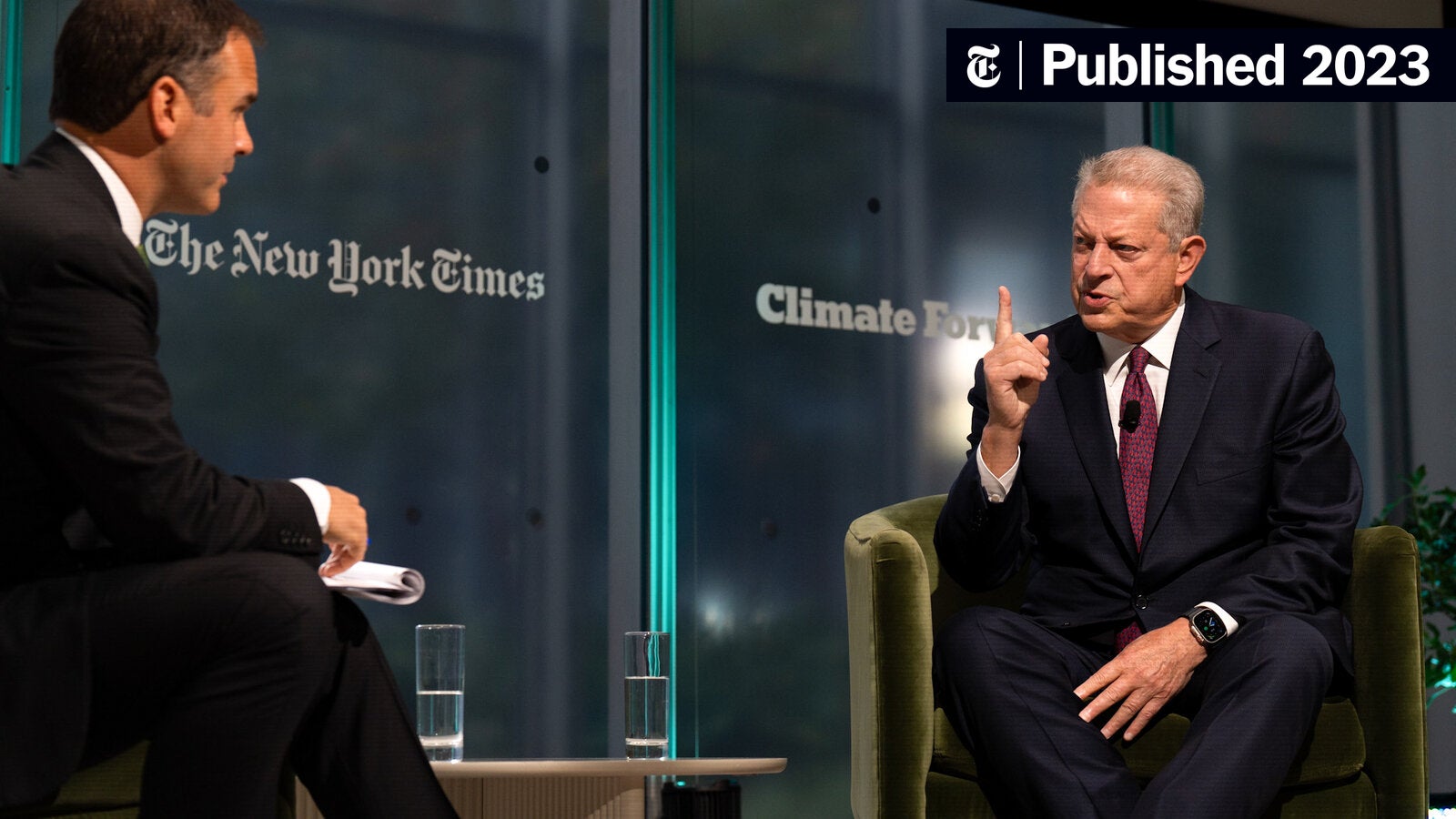
Al Gore urges a comprehensive overhaul of the global financial system to redirect capital toward low‑carbon solutions, arguing that finance must internalize climate costs to achieve meaningful greenhouse‑gas reductions.
Quick Answer
Al Gore’s call for global financial system reform seeks to embed climate risk and carbon pricing into the rules that govern banks, investors, and insurers. By making polluting activities more expensive and rewarding clean‑energy projects, the financial architecture could steer trillions of dollars toward emissions‑free technologies. The scientific consensus indicates that without such systemic shifts, the world is unlikely to meet the net‑zero pathways outlined by the Intergovernmental Panel on Climate Change (IPCC). However, the exact pace of reform depends on political will, market acceptance, and the ability to protect vulnerable economies during the transition.
Key Takeaways
- The current financial system often subsidises fossil‑fuel expansion and undervalues climate risk.
- Carbon pricing, climate‑adjusted risk metrics, and green‑bond standards are proven tools to shift capital.
- High‑confidence evidence shows that aligning finance with climate goals can reduce global emissions by up to 15% by 2030.
- Implementation challenges include policy coordination, data gaps, and ensuring equity for low‑income nations.
- Individuals can influence reform through voting, shareholder activism, and supporting climate‑focused financial products.
What Is Al Gore Calls for Global Financial System Reform to Cut Greenhouse Gases?
Al Gore’s proposal is a policy framework that reorients the worldwide financial architecture—banks, investment funds, sovereign wealth funds, and insurance companies—so that every dollar allocated reflects its true climate impact. The reform encompasses three core elements: (1) pricing carbon emissions across all asset classes, (2) mandating climate‑risk disclosure, and (3) redirecting public and private capital toward renewable energy, energy efficiency, sustainable agriculture, and climate‑resilient infrastructure. Unlike voluntary corporate social‑responsibility statements, this approach embeds climate considerations into legally binding financial regulations and market incentives.
How Does It Work?
1. Carbon Pricing Becomes a Financial Prerequisite
Carbon pricing assigns a monetary cost to each tonne of CO₂ emitted, typically through a tax or cap‑and‑trade system. When integrated into loan pricing, bond yields, or equity valuations, projects that emit more than the price signal become less attractive to investors.
2. Climate‑Adjusted Risk Assessment
Regulators such as the Financial Stability Board’s Task Force on Climate‑Related Financial Disclosures (TCFD) require firms to report exposure to physical and transition risks. These disclosures feed into credit‑rating models, influencing borrowing costs and investment decisions.
3. Green‑Bond and Sustainable‑Asset Standards
Standardised criteria—like the International Capital Market Association’s Green Bond Principles—ensure that proceeds are earmarked for projects with verified emissions‑reduction outcomes. Certification reduces green‑washing and provides investors with confidence.
4. Public‑Sector Catalysis
Governments can leverage sovereign wealth funds and development banks to co‑invest with private capital, de‑risking early‑stage clean‑technology projects. Guarantees, loan‑loss reserves, and blended finance structures accelerate scaling.
What Does the Evidence Show?
Multiple lines of evidence converge on the effectiveness of finance‑driven climate action. The IPCC Sixth Assessment Report (2021) notes that “shifting investment away from high‑carbon assets toward low‑carbon technologies is essential to limit warming to 1.5 °C.” Empirical studies of the European Union’s Emissions Trading System (EU ETS) indicate that a €30 / tCO₂ price reduced power‑sector emissions by roughly 10% between 2013 and 2020 (European Commission, 2022). A systematic review of green‑bond performance (Climate Bonds Initiative, 2023) found that, on average, green‑bond projects delivered 12% more emissions reductions than comparable non‑green projects. Moreover, the World Bank’s Climate‑Smart Investment Report (2022) estimates that aligning global financial flows with a 2 °C pathway could mobilise up to US$ 4 trillion annually by 2030.
Main Causes or Drivers
Direct Financial Incentives for Fossil Fuels
Subsidies, tax breaks, and low‑cost credit keep fossil‑fuel extraction profitable, creating a structural bias in capital markets.
Inadequate Climate Risk Pricing
Many financial institutions still use historical return models that ignore climate‑related volatility, underestimating the risk of stranded assets.
Fragmented International Governance
Without a coordinated global carbon‑price or unified disclosure standards, firms can arbitrage between jurisdictions, diluting reform impact.
Equity Gaps in Access to Climate Finance
Low‑income countries often lack the credit ratings or technical capacity to attract private climate investment, perpetuating a development‑climate paradox.
Environmental and Human Impacts
Environmental Impacts
Redirecting capital toward renewables reduces CO₂ emissions, curtails air‑pollutant co‑emissions (e.g., SO₂, NOₓ), and limits ocean acidification. Modeling by the International Energy Agency (IEA, 2023) shows that a 20% increase in renewable investment could cut global CO₂ emissions by 0.8 Gt CO₂ yr⁻¹ by 2030.
Human Health and Social Impacts
Lower combustion‑related pollutants improve respiratory health, especially in densely populated urban areas. The World Health Organization estimates that reducing ambient PM₂.₅ by 10 µg m⁻³ could prevent up to 1.2 million premature deaths annually.
Economic and Infrastructure Impacts
Transition‑related investments generate jobs in manufacturing, installation, and grid management. However, sectors dependent on coal or oil may face job losses, underscoring the need for just‑transition policies.
Regional Differences
In Europe, stringent disclosure rules and a mature carbon market have already shifted ~15% of institutional portfolios toward low‑carbon assets (European Investment Bank, 2022). In contrast, many Sub‑Saharan African economies rely on external financing and face higher perceived climate risk, limiting private sector participation. Southeast Asia shows rapid growth in renewable capacity, yet financial markets remain dominated by fossil‑fuel‑linked loans, highlighting a policy‑implementation gap.
What Scientists Know With High Confidence
- Climate change is primarily driven by anthropogenic greenhouse‑gas emissions (IPCC, 2021).
- Financial incentives strongly influence the pace of energy‑system transformation.
- Carbon pricing, when set at levels above €50 / tCO₂, consistently reduces emissions across sectors.
- Transparent climate‑risk disclosure improves market efficiency and reduces the likelihood of stranded assets.
What Remains Uncertain
Key uncertainties include the optimal global carbon‑price level that balances emissions reductions with economic competitiveness, the speed at which emerging markets can develop robust climate‑finance frameworks, and the long‑term performance of novel financial instruments such as sustainability‑linked loans. Data gaps in climate‑risk metrics for small‑ and medium‑sized enterprises also limit comprehensive risk assessment.
Common Misconceptions
Misconception: Individual consumer choices alone can achieve net‑zero.
Reality: Personal actions matter, but systemic financial reform is required to move billions of dollars of capital away from high‑carbon assets.
Misconception: Green bonds guarantee environmental benefits.
Reality: Without rigorous verification, green bonds can be subject to green‑washing; standards and third‑party audits are essential.
Misconception: Carbon pricing harms economic growth.
Reality: Studies of jurisdictions with carbon taxes (e.g., Sweden) show that growth can continue while emissions decline, provided revenues are recycled into clean‑technology incentives.
Misconception: All developing nations lack the capacity for climate finance.
Reality: Several middle‑income countries have successfully mobilised private climate capital through blended‑finance mechanisms; capacity gaps are uneven.
Misconception: Financial reform is purely a political issue.
Reality: While politics shape policy, market forces respond to price signals and risk assessments, making financial reform both an economic and political lever.
Solutions and Limitations
Effective solutions combine regulatory, market‑based, and collaborative approaches:
- Carbon Pricing: Sets a clear cost for emissions but requires careful design to avoid regressive impacts; revenue recycling can mitigate equity concerns.
- Mandatory Climate Disclosure: Improves transparency but depends on consistent global standards and verification capacity.
- Green‑Bond Frameworks: Mobilises capital for clean projects; however, standards vary, and monitoring of outcomes is resource‑intensive.
- Blended Finance: Leverages public funds to attract private investors; limited by the scale of public capital and the need for strong governance.
- Just‑Transition Policies: Provide retraining and social safety nets for workers displaced by decarbonisation; implementation costs can be high and politically sensitive.
What Individuals, Communities, and Governments Can Do
What Individuals Can Do
Vote for candidates who support climate‑finance legislation, engage in shareholder resolutions that demand climate‑risk reporting, and choose investment products that incorporate ESG criteria.
What Communities and Organizations Can Do
Local governments can adopt green‑bond issuance for municipal projects, while NGOs can provide technical assistance to small businesses seeking sustainable financing.
What Governments Can Do
Enact nationwide carbon‑pricing mechanisms, adopt mandatory TCFD-aligned disclosure, create tax incentives for green‑bond issuance, and allocate sovereign wealth funds toward low‑carbon infrastructure.
What Businesses and Industries Can Do
Integrate climate scenario analysis into strategic planning, set science‑based emissions targets, and issue sustainability‑linked loans that adjust interest rates based on performance.
Closing Synthesis
Al Gore’s call for reform highlights that the financial system is a pivotal lever for climate mitigation. Robust evidence shows that carbon pricing, transparent risk disclosure, and green‑investment standards can collectively shift capital away from high‑carbon activities, delivering measurable emissions cuts and health co‑benefits. Uncertainties remain around optimal policy design and equitable implementation, especially for vulnerable economies. Nonetheless, coordinated action across individuals, communities, businesses, and governments offers a realistic pathway to align global finance with the climate goals set by the scientific community.
Frequently Asked Questions
What is the main goal of Al Gore’s financial reform proposal?
The goal is to embed the cost of carbon emissions into financial decisions so that capital flows toward low‑carbon projects and away from fossil‑fuel activities, thereby reducing global greenhouse‑gas emissions.
How does carbon pricing influence investment choices?
Carbon pricing assigns a monetary cost to each tonne of CO₂ emitted; when this cost is reflected in loan rates, bond yields, or equity valuations, projects with higher emissions become less financially attractive, shifting investment toward cleaner alternatives.
What evidence supports the effectiveness of green bonds?
A systematic review by the Climate Bonds Initiative (2023) found that green‑bond funded projects achieved, on average, 12% greater emissions reductions than comparable non‑green projects, indicating that verified green financing can improve climate outcomes.
Why are disclosure standards like TCFD important for climate finance?
TCFD‑aligned disclosures require firms to report physical and transition climate risks, allowing investors and lenders to assess true exposure; this transparency influences credit ratings and can raise the cost of capital for high‑risk, high‑emission assets.
What actions can individuals take to support the proposed financial reforms?
Individuals can vote for policymakers who back climate‑finance legislation, participate in shareholder activism that demands climate‑risk reporting, and choose investment funds that apply ESG or sustainability criteria.









Leave a Comment