
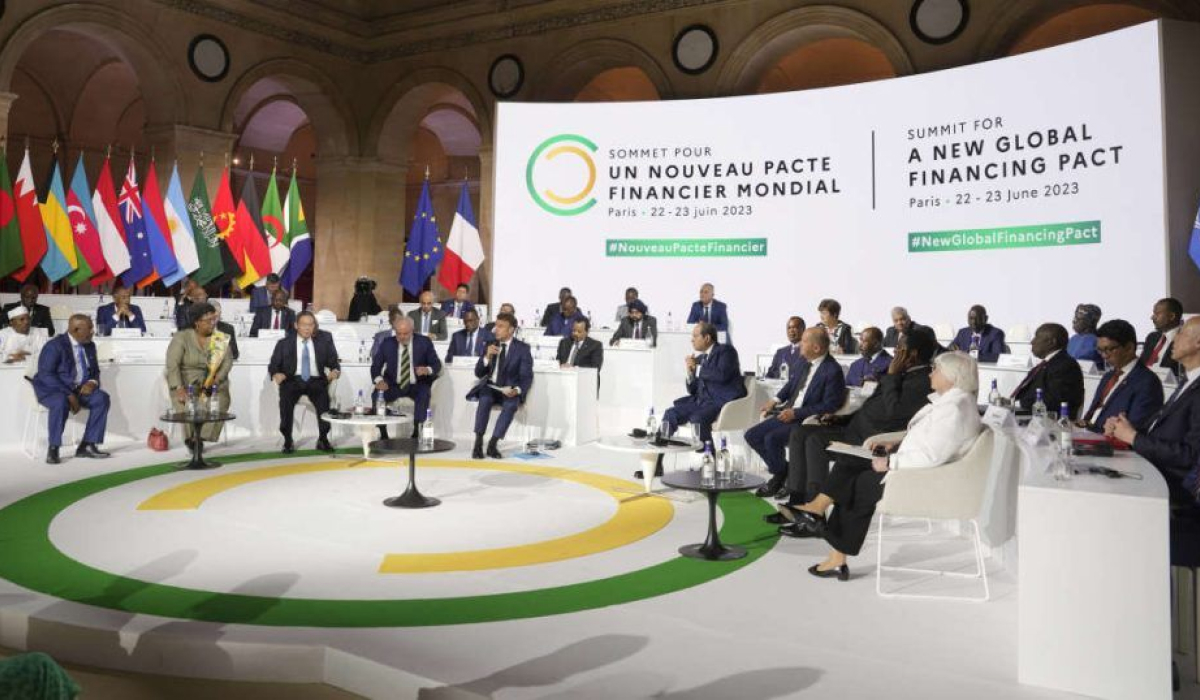
The Paris Summit’s new Global Climate Finance Pact outlines five enduring takeaways that shape equitable funding, institutional reform, private‑sector mobilisation, innovative financing tools, and multi‑stakeholder collaboration for climate action.
Quick Answer
The Paris Summit produced a Global Climate Finance Pact that commits wealthier nations to increase and channel climate‑related financing toward developing countries, reforms the rules of major multilateral lenders, leverages private‑sector capital, introduces novel financing instruments such as green and resilience bonds, and establishes collaborative frameworks that bring governments, NGOs, and businesses together. Evidence from the Intergovernmental Panel on Climate Change (IPCC) and United Nations (UN) assessments shows that scaling finance is essential to limit warming to 1.5 °C, but uncertainties remain around the exact volume of funds needed and the speed of implementation.
Key Takeaways
- Climate equity is central: High‑income countries must meet and expand their pledged contributions to address loss and damage in vulnerable nations.
- Global financial institutions need reform: The IMF and World Bank are urged to relax loan conditions for climate projects and increase liquidity for low‑income economies.
- Private‑sector capital is a growth engine: Public‑private partnerships and blended‑finance mechanisms are promoted to mobilise trillions of dollars beyond public budgets.
- Innovative financing tools are emerging: Green bonds, climate‑resilience bonds, and blended‑finance pools aim to diversify investors and lower risk.
- Multi‑stakeholder collaboration is indispensable: Coordinated action among governments, civil society, academia, and industry is required to translate finance into on‑ground impact.
What Is 5 Key Takeaways From the Paris Summit’s New Global Climate Finance Pact?
The five takeaways are concise insights distilled from the final communiqué of the Paris Summit held in 2023. They summarise the pact’s commitments, the structural changes it proposes for international finance, and the strategic pathways identified for scaling climate action. Unlike earlier pledges that focused mainly on mitigation, this pact integrates adaptation, loss‑and‑damage compensation, and systemic financial reforms, reflecting a broader definition of climate finance that includes both public and private sources.
How Does It Work?
1. Allocation of Climate‑Equity Funds
High‑income nations submit nationally determined contributions (NDCs) that include a finance component. The pact establishes a monitoring mechanism, overseen by the UNFCCC, to track whether these contributions meet the agreed‑upon baseline of 100 billion USD annually (as measured in 2022 purchasing‑power‑parity). Funds are channeled through dedicated climate‑finance facilities that prioritize projects addressing loss and damage.
2. Reforming Multilateral Lending
The IMF and World Bank adopt “climate‑responsive” lending criteria. This means that loan eligibility now includes a climate‑risk assessment, and interest rates may be reduced for projects that demonstrate high mitigation or adaptation potential. The reforms also create a “climate‑liquidity line” that can be drawn upon quickly during climate‑related emergencies.
3. Leveraging Private Capital
Public entities provide credit enhancements—such as guarantees or first‑loss cushions—to attract private investors. Blended‑finance vehicles combine concessional capital with market‑rate investments, spreading risk and making large‑scale renewable‑energy or resilient‑infrastructure projects bankable.
4. Deploying Innovative Instruments
Green bonds, certified by standards like the Climate Bonds Initiative, raise capital for renewable‑energy projects. Climate‑resilience bonds target investments that enhance flood protection, coastal defenses, or drought‑resistant agriculture. These instruments are listed on international exchanges, increasing transparency and market depth.
5. Coordinating Stakeholders
A governance forum, co‑chaired by the UNFCCC and the World Bank, convenes annually to align national policies, share best practices, and resolve implementation bottlenecks. The forum also tracks progress against the Sustainable Development Goals (SDGs) and the Paris Agreement temperature targets.
What Does the Evidence Show?
Multiple lines of evidence confirm that increased climate finance improves mitigation and adaptation outcomes. The IPCC’s Sixth Assessment Report (2021) states that limiting warming to 1.5 °C requires annual climate‑related investment of roughly 2.5 trillion USD, with at least 50 % directed to developing nations. A systematic review of blended‑finance case studies (World Bank, 2022) found that projects using public guarantees achieved an average cost‑of‑capital reduction of 1.8 percentage points, enabling earlier deployment of renewable‑energy capacity. Monitoring data from the Climate Bonds Initiative (2023) show that green‑bond issuance grew from 150 billion USD in 2020 to over 300 billion USD in 2022, indicating expanding market appetite.
Main Causes or Drivers
Direct Drivers
Insufficient public funding and the high perceived risk of climate projects have historically limited investment, especially in low‑income regions.
Underlying Drivers
Economic inequality, legacy debt burdens, and the lack of climate‑risk integration in traditional financial analysis exacerbate the financing gap.
Amplifying Factors
Rapidly rising climate impacts—such as increased frequency of extreme weather—heighten the urgency for adaptation finance, while falling costs of solar and wind technologies improve the business case for mitigation investment.
Environmental and Human Impacts
Environmental Impacts
Effective climate finance can accelerate the deployment of low‑carbon energy, reducing CO₂ emissions at a rate of roughly 0.5 gigatonnes per year according to the International Energy Agency (2022). Adaptation funding protects ecosystems by supporting mangrove restoration, which sequesters carbon and buffers storm surges.
Human Health and Social Impacts
Investments in resilient water infrastructure lower the incidence of water‑borne diseases in flood‑prone regions, as documented by the World Health Organization (2021). Climate‑finance projects that improve housing durability reduce displacement after extreme events, supporting livelihood stability.
Economic and Infrastructure Impacts
Financing renewable‑energy grids lowers electricity costs over time, fostering industrial growth. Climate‑resilience bonds have funded flood‑defense upgrades in the Netherlands, resulting in an estimated net‑present‑value benefit of 1.3 times the investment.
Regional Differences
In Sub‑Saharan Africa, limited fiscal space makes concessional financing essential; blended‑finance pilots in Kenya have leveraged $120 million of private capital for solar mini‑grids. In contrast, Europe’s mature bond markets enable large‑scale green‑bond issuance, with Germany and France jointly issuing over 50 billion USD in 2022. Island nations in the Pacific face acute loss‑and‑damage threats, prompting the pact’s specific loss‑and‑damage fund, which is expected to channel at least $5 billion by 2030.
What Scientists Know With High Confidence
- Increasing climate finance is essential to meet the Paris Agreement temperature goals.
- Public‑private partnerships reduce the cost of capital for renewable‑energy projects.
- Loss‑and‑damage impacts are disproportionately borne by low‑income, climate‑vulnerable nations.
- Financial instruments that tie returns to environmental outcomes improve transparency and investor confidence.
What Remains Uncertain
Key uncertainties include the exact scale of financing needed under different emissions pathways, the speed at which private investors will respond to blended‑finance incentives, and the effectiveness of newly created loss‑and‑damage mechanisms in delivering timely reparations. Data gaps in tracking the flow of private capital to climate projects also limit precise evaluation of progress.
Common Misconceptions
Misconception: The Paris Pact eliminates the need for public climate funding.
Reality: Public finance remains the backbone for de‑risking projects and for addressing loss and damage; private capital amplifies, not replaces, public resources.
Misconception: Green bonds guarantee that projects are environmentally beneficial.
Reality: While green‑bond standards improve disclosure, the actual climate impact depends on robust project selection and monitoring.
Misconception: All developing countries receive equal financing under the pact.
Reality: Allocation is needs‑based, meaning countries with higher vulnerability and lower adaptive capacity receive proportionally more resources.
Solutions and Limitations
Scaling climate finance requires coordinated mitigation, adaptation, and loss‑and‑damage strategies. Mitigation‑focused funding accelerates decarbonisation but may overlook immediate adaptation needs. Adaptation finance builds resilience but often yields benefits that are difficult to quantify in monetary terms. Loss‑and‑damage mechanisms address historic responsibility but face political resistance and complex verification challenges. Innovative instruments expand the investor base, yet market volatility can affect bond pricing and investor appetite.
What Individuals, Communities, and Governments Can Do
What Individuals Can Do
Support organisations that advocate for robust climate‑finance policies, choose financial products (e.g., green‑bond funds) that align with climate goals, and engage in local climate‑resilience planning.
What Communities and Organizations Can Do
Develop community‑led renewable projects, partner with municipalities to access blended‑finance schemes, and document local climate impacts to inform loss‑and‑damage claims.
What Governments Can Do
Raise and honor climate‑finance commitments, reform national budgeting to integrate climate risk, and create transparent reporting platforms that track public and private flows.
What Businesses and Industries Can Do
Offer climate‑linked loans, adopt internal carbon‑pricing mechanisms, and disclose climate‑related financial risks in line with the Task Force on Climate‑Related Financial Disclosures (TCFD) recommendations.
Synthesis of Key Insights
The Paris Summit’s Global Climate Finance Pact crystallises five enduring principles: equity‑driven funding, reformed multilateral lending, private‑sector mobilisation, innovative financing tools, and collaborative governance. High‑confidence evidence shows these measures are vital to limit warming, yet uncertainties about scale, timing, and effectiveness persist. By recognising both the promise and the limits of each approach, stakeholders can design policies that channel finance where it is most needed, while continuously improving measurement and accountability.
Frequently Asked Questions
What is the main purpose of the Paris Summit’s Global Climate Finance Pact?
The pact aims to increase and better direct climate‑related financing toward developing countries, reform multilateral lending rules, mobilise private capital, introduce innovative financing instruments, and foster multi‑stakeholder collaboration.
How does the pact address loss and damage for vulnerable nations?
It establishes a dedicated loss‑and‑damage fund, obliges high‑income countries to meet and expand their financial pledges, and prioritises projects that compensate communities for climate‑induced harms.
What role do green bonds play under the new climate finance framework?
Green bonds raise capital for renewable‑energy and low‑carbon projects, offering transparent reporting standards that attract a broader investor base while supporting the pact’s financing goals.
Why is private‑sector involvement considered essential in the pact?
Public budgets alone cannot meet the trillions of dollars needed; private‑sector capital, leveraged through guarantees and blended‑finance structures, can close the financing gap and accelerate project deployment.
What are the main uncertainties surrounding the implementation of the pact?
Key unknowns include the precise total financing required under different emissions pathways, the speed of private‑sector response, and the effectiveness of loss‑and‑damage mechanisms in delivering timely reparations.







Leave a Comment