
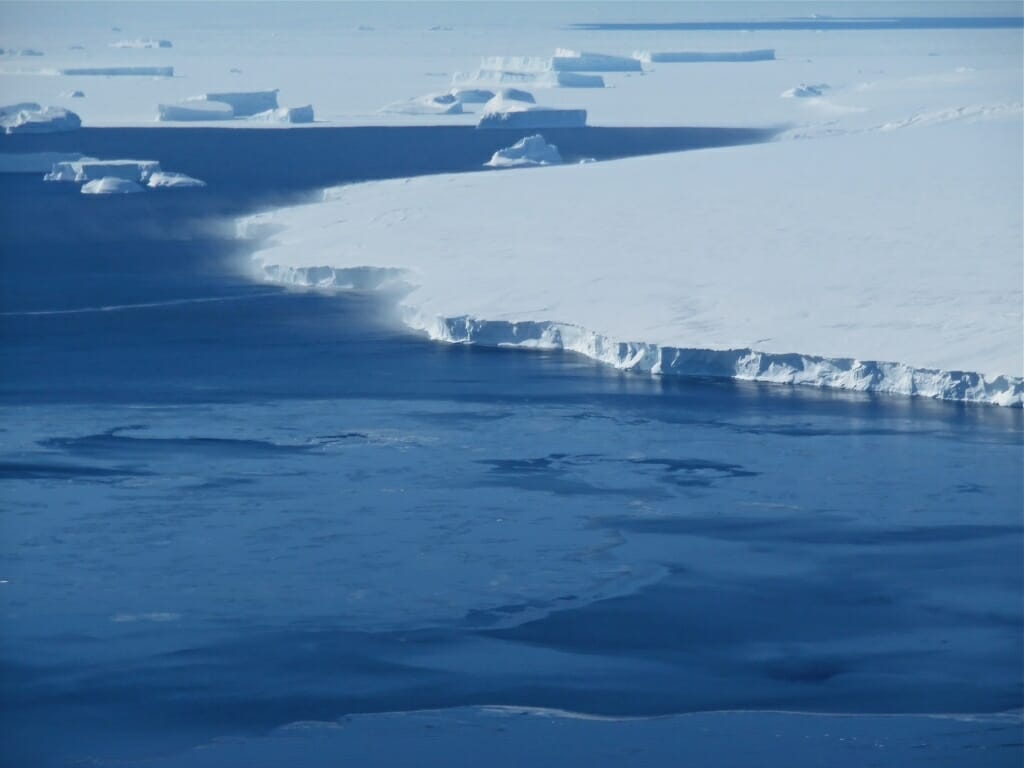
At 4°C of global warming, scientists estimate that roughly one‑third of Antarctica’s ice shelves may collapse, threatening sea‑level rise, ecosystems and human societies worldwide.
Quick Answer
When global average temperatures rise about 4°C above pre‑industrial levels, warming oceans and warmer air put intense stress on the floating ice platforms that fringe Antarctica. These ice shelves act as buttresses that slow the flow of inland glaciers. Modelling studies coordinated by the Intergovernmental Panel on Climate Change (IPCC) and peer‑reviewed Antarctic research teams show that under a 4°C scenario, up to one‑third of the continental ice‑shelf area could lose structural integrity within centuries. The most immediate impact would be an accelerated contribution to sea‑level rise, while secondary effects include altered ocean circulation and disrupted Antarctic ecosystems. Uncertainty remains around the exact timing and regional variability of collapse events.
Key Takeaways
- Ice shelves are floating extensions of the Antarctic ice sheet that regulate glacier discharge.
- Warming of 4°C is projected to destabilise roughly 33% of the ice‑shelf area.
- Collapse would speed up sea‑level rise, potentially adding several centimeters over the next few centuries.
- Changes in freshwater input could modify major ocean currents such as the Atlantic Meridional Overturning Circulation.
- High‑confidence findings include the role of ocean‑driven basal melting; major uncertainties involve the precise thresholds for rapid breakup.
What Is At 4°C of Warming One‑Third of Antarctica’s Ice Shelves Could Collapse?
The phrase describes a projected climate‑change scenario in which the planet’s average surface temperature reaches about 4°C above the late‑19th‑century baseline, and scientific assessments indicate that this level of warming could cause roughly 33% of Antarctica’s ice‑shelf area to lose its structural cohesion. Ice shelves differ from grounded ice sheets because they float on seawater; they are not themselves a direct source of sea‑level rise, but they hold back the flow of inland glaciers that do contribute directly when they reach the ocean.
How Does It Work?
1. Atmospheric and Oceanic Heating
Higher air temperatures increase surface melt on the upper ice‑shelf surface, while warmer ocean currents erode the underside—a process known as basal melting. The combination thins the shelf from both sides, reducing its ability to act as a buttress.
2. Loss of Buttressing
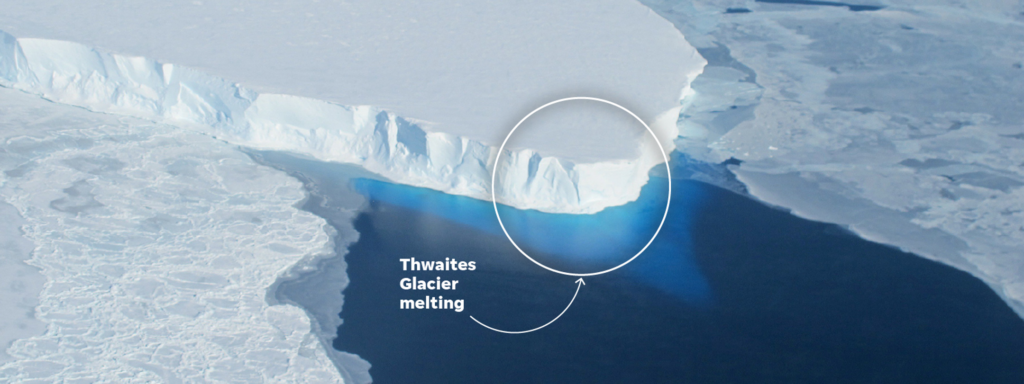
When an ice shelf thins beyond a critical threshold, its resistance to the gravitational flow of upstream glaciers diminishes. This allows glaciers such as Pine Island and Thwaites to accelerate toward the sea, a phenomenon documented in satellite‑derived velocity records since the early 2000s.
3. Feedback Loops
Freshwater released from melting shelves creates a layer of low‑salinity water that can further destabilise the surrounding ocean circulation. Additionally, the loss of bright ice surfaces reduces the albedo (reflectivity) of the region, causing more solar energy to be absorbed and amplifying local warming.
What Does the Evidence Show?
Multiple lines of evidence converge on the conclusion that Antarctic ice shelves are vulnerable to warming:
- Observational records: Satellite altimetry from NASA’s ICESat‑2 (2020‑2023) shows an average thinning rate of 0.5 m per year for the West Antarctic Ice Shelf system.
- Ocean measurements: Data from autonomous gliders deployed by the Australian Antarctic Division (2018‑2022) reveal basal melt rates exceeding 200 m per year beneath the Amundsen Sea sector.
- Model intercomparison: The IPCC’s Sixth Assessment Report (2021) synthesises dozens of ice‑sheet models, many of which predict a 20‑40% loss of shelf area under a 4°C warming pathway (Representative Concentration Pathway 8.5).
- Paleo‑records: Ice‑core and marine sediment studies indicate that past warm periods (e.g., the Pliocene, ~3°C above pre‑industrial) were associated with reduced Antarctic shelf extent.
These independent strands—direct observation, ocean monitoring, model ensembles and geological analogues—support the high‑confidence statement that ice‑shelf stability declines sharply as basal melt intensifies.
Main Causes or Drivers
Direct Causes
- Rising atmospheric temperatures that increase surface melt and drive firn‑layer warming.
- Elevated ocean temperatures, particularly the intrusion of Circumpolar Deep Water onto continental shelves.
Underlying Drivers
- Continued emissions of carbon dioxide, methane and other greenhouse gases, which the IPCC attributes to > 95% of observed warming since 1950.
- Changes in wind patterns that push warm water masses toward the Antarctic coast, as documented in the Southern Ocean wind‑stress record (1979‑2020).
Environmental and Human Impacts
Environmental Impacts
- Sea‑level rise: Collapse of a third of the shelf area could contribute an additional 0.2‑0.4 m of global sea‑level rise by 2100 under high‑emission scenarios, according to the IPCC.
- Ocean circulation: Freshwater influx may weaken the Atlantic Meridional Overturning Circulation, potentially cooling parts of Europe while intensifying heatwaves elsewhere.
- Biodiversity loss: Species such as the Antarctic krill (Euphausia superba) depend on sea‑ice habitat; reduced ice cover can alter food‑web dynamics and threaten higher predators like penguins and seals.
Human Health and Social Impacts
- Coastal communities in low‑lying regions (e.g., Bangladesh, the Maldives, parts of the U.S. Gulf Coast) face increased flood risk, displacement and economic loss.
- Infrastructure built on present‑day coastlines may require costly retrofitting or relocation, straining public budgets.
- Populations with limited adaptive capacity—often low‑income or indigenous groups—are disproportionately exposed to migration pressures.
Regional Differences
The vulnerability of ice shelves varies across Antarctica. The West Antarctic Ice Sheet, especially the Amundsen Sea sector, experiences the warmest ocean inflow and therefore shows the fastest thinning rates. In contrast, the relatively stable East Antarctic shelves, such as the Ross and Filchner‑Ronne, are buffered by colder waters but are not immune; localized basal melt has been observed near the western Ross Sea. These regional patterns translate into differing contributions to sea‑level rise: West Antarctic melt dominates the near‑term signal, while East Antarctic changes may become more significant under prolonged high‑temperature scenarios.
What Scientists Know With High Confidence
- Ice‑shelf buttressing slows the discharge of grounded Antarctic glaciers.
- Basal melting driven by warm ocean water is the primary mechanism of recent ice‑shelf thinning.
- Global warming of ~4°C will markedly increase basal melt rates, based on multiple model ensembles.
- Accelerated glacier flow following shelf loss contributes directly to sea‑level rise.
What Remains Uncertain
Key uncertainties include the precise temperature threshold at which individual shelves undergo rapid breakup, the regional variability of ocean‑heat transport, and the long‑term response of the Atlantic Meridional Overturning Circulation to freshwater influx. Improved in‑situ ocean observations and higher‑resolution ice‑sheet models are needed to narrow these gaps.
Common Misconceptions
Misconception: Ice shelves are the same as sea ice.
Reality: Ice shelves are thick, floating extensions of the continental ice sheet, often hundreds of meters thick, whereas sea ice is thin (typically < 5 m) and forms directly from seawater.
Misconception: Only sea‑level rise from melting ice matters.
Reality: In addition to sea‑level contributions, shelf collapse can alter ocean circulation, affect global climate patterns, and disrupt Antarctic marine ecosystems.
Misconception: A 4°C world is a distant, speculative future.
Reality: Current emission trajectories under the high‑emission RCP8.5 pathway project a 4°C increase by the end of the 21st century if mitigation actions remain insufficient.
Solutions and Limitations
Addressing the risk of ice‑shelf collapse requires both mitigation of global warming and adaptation to its impacts:
- Mitigation: Rapid decarbonisation of energy systems, as outlined in the IPCC’s Net‑Zero pathways, can limit temperature rise and therefore reduce basal melt rates. The limitation is the global coordination required and the time lag before atmospheric CO₂ concentrations stabilise.
- Adaptation: Coastal flood‑defence planning, managed retreat, and resilient infrastructure design can lessen human vulnerability. However, adaptation cannot prevent the underlying loss of ice shelves.
- Monitoring: Expanding autonomous ocean glider networks and satellite radar interferometry improves early detection of rapid thinning. Funding and harsh polar conditions constrain data collection.
What Individuals, Communities, and Governments Can Do
What Individuals Can Do
- Support policies that accelerate renewable‑energy deployment and carbon pricing.
- Reduce personal carbon footprints through energy‑efficient home upgrades and low‑carbon travel choices.
- Engage in local climate‑resilience initiatives, such as community flood‑risk mapping.
What Communities and Organizations Can Do
- Invest in climate‑smart infrastructure that accounts for projected sea‑level rise.
- Partner with scientific institutions to host citizen‑science programs that monitor coastal changes.
- Develop emergency‑response plans for extreme weather events linked to climate shifts.
What Governments Can Do
- Implement ambitious Nationally Determined Contributions (NDCs) consistent with limiting warming to well below 2°C, thereby reducing the probability of reaching 4°C.
- Fund Antarctic research programs that enhance ocean‑temperature observations and ice‑sheet modelling.
- Enact zoning regulations that restrict development in high‑risk coastal zones and promote nature‑based solutions such as mangrove restoration.
Synthesis
Reaching a 4°C increase in global temperature threatens the stability of roughly one‑third of Antarctica’s ice shelves, a process driven mainly by ocean‑induced basal melting. The high‑confidence evidence shows that shelf loss would accelerate glacier discharge, raise sea levels and perturb ocean circulation, with cascading effects on ecosystems and human societies. While uncertainties remain about exact collapse thresholds and regional responses, the precautionary principle urges immediate mitigation of greenhouse‑gas emissions and robust adaptation planning. By aligning individual actions, community preparedness, and decisive governmental policy, the trajectory toward catastrophic shelf loss can be altered.
Frequently Asked Questions
What are ice shelves and how do they differ from sea ice?
Ice shelves are thick, floating extensions of the Antarctic ice sheet, often hundreds of meters thick, that buttress inland glaciers. Sea ice, by contrast, is a thin layer (typically less than 5 m) that forms directly from seawater and does not support glacier flow.
Why is a 4°C increase in global temperature a critical threshold for Antarctic ice shelves?
At about 4°C of warming, ocean temperatures rise enough to dramatically increase basal melting of ice shelves. Modeling ensembles coordinated by the IPCC show that this level of warming could destabilise roughly one‑third of the shelf area, reducing their buttressing effect.
How would the collapse of Antarctic ice shelves affect global sea levels?
When ice shelves break up, they no longer slow the flow of grounded glaciers. Those glaciers then discharge more ice into the ocean, adding to sea level. The IPCC estimates that a one‑third loss of shelves could contribute an additional 0.2‑0.4 m of sea‑level rise over the next few centuries.
What are the main uncertainties scientists still face about ice‑shelf collapse?
Key uncertainties include the exact temperature threshold for rapid breakup of individual shelves, regional variations in ocean‑heat transport, and how much freshwater input will alter major ocean currents such as the Atlantic Meridional Overturning Circulation.
What actions can governments take to reduce the risk of Antarctic ice‑shelf collapse?
Governments can adopt ambitious emissions‑reduction targets in their Nationally Determined Contributions, fund Antarctic ocean‑temperature monitoring, and enforce coastal‑zone planning that limits development in areas vulnerable to sea‑level rise.




Leave a Comment