

Wind energy converts the kinetic power of moving air into electricity through turbines, offering a renewable, low‑carbon power source whose science, impacts, and future are grounded in robust evidence.
Quick Answer
Wind energy harnesses the kinetic energy of atmospheric air currents with turbine blades that rotate a generator, producing electricity via electromagnetic induction. The process relies on solar‑driven temperature differences that create pressure gradients and wind. Scientific assessments show that modern wind farms generate power with near‑zero greenhouse‑gas emissions during operation, though intermittency requires storage or grid management. The technology is mature, scalable, and increasingly cost‑competitive, yet site selection, wildlife interactions, and variability remain key challenges.
Key Takeaways
- Wind turbines convert kinetic energy to electricity using electromagnetic induction.
- Solar heating drives global wind patterns, making wind a renewable resource.
- Operational emissions are negligible, but manufacturing and installation have a carbon footprint.
- Intermittency is mitigated by storage, forecasting, and diversified grids.
- Environmental impacts include habitat disturbance and noise, which can be managed through careful siting.
- Policy support, community engagement, and technological advances are essential for continued growth.
What Is The Science Behind Wind Energy Explained Simply?
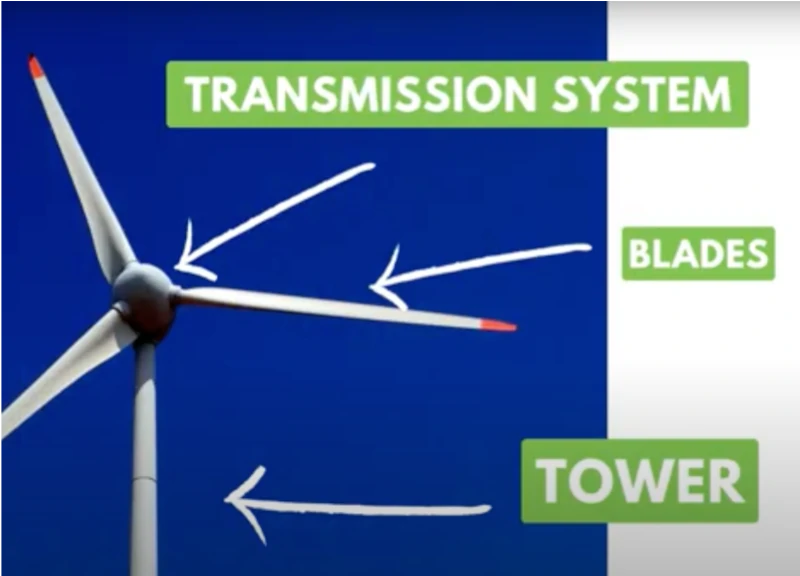
Wind energy refers to the capture of kinetic energy from moving air and its conversion into usable electrical power. It is a subset of renewable energy because the wind is continuously regenerated by solar heating of the Earth’s surface. The primary components of a wind power system are the rotor (blades and hub), the nacelle (which houses the generator, gearbox, and control electronics), and the tower that supports the rotor at a height where wind speeds are higher and more consistent.
How Does It Work?
1. Wind Formation
Sunlight warms the Earth unevenly, creating areas of high and low atmospheric pressure. Air moves from high‑pressure zones to low‑pressure zones, creating wind. This fundamental thermodynamic process is described in the field of atmospheric physics and is documented by agencies such as the World Meteorological Organization.
2. Blade Aerodynamics
The rotor blades are shaped like airfoils. When wind passes over a blade, a pressure difference is created between the upper and lower surfaces, producing lift that causes the rotor to spin. The amount of power captured is proportional to the cube of wind speed, as expressed by the equation P = ½ ρ A v³ (where ρ is air density, A is swept area, and v is wind speed).
3. Mechanical to Electrical Conversion
Rotational motion is transferred through a gearbox (or directly in direct‑drive designs) to a generator. Inside the generator, a magnetic field moves relative to conductive coils, inducing an electric current—a process first described by Michael Faraday in 1831. This electromagnetic induction is the core mechanism that produces electricity.
4. Power Conditioning and Grid Integration
The generated electricity is typically alternating current (AC) at a frequency and voltage suitable for the grid. Power electronics convert, synchronize, and step up the voltage before transmission. Modern turbines also contain sensors and control systems that adjust blade pitch and yaw to maximize energy capture while protecting the machine from extreme winds.
What Does the Evidence Show?
Long‑term monitoring by national agencies such as the U.S. Energy Information Administration (EIA) and the International Energy Agency (IEA) demonstrates that wind power has grown from less than 1 % of global electricity in 2000 to about 7 % in 2022, with an average capacity factor of 30‑45 % for on‑shore sites. Peer‑reviewed meta‑analyses confirm that life‑cycle greenhouse‑gas emissions from wind are 10–20 g CO₂‑eq kWh⁻¹, far lower than coal (≈820 g CO₂‑eq kWh⁻¹) or natural gas (≈490 g CO₂‑eq kWh⁻¹). Field studies across Europe and North America show that well‑sited turbines cause modest bird and bat mortality, which can be reduced through curtailment strategies and turbine design improvements.
Main Causes or Drivers
Direct Causes
The immediate cause of electricity generation is the kinetic energy of wind acting on turbine blades.
Underlying Drivers
Solar heating, Earth’s rotation, and geographic features (mountains, coastlines) create wind patterns. Human drivers include climate‑change mitigation policies, renewable‑energy subsidies, and technological cost reductions, all of which accelerate wind‑energy deployment.
Environmental and Human Impacts
Environmental Impacts
- Climate mitigation: Operational emissions are negligible, contributing to reduced atmospheric CO₂ when displacing fossil fuels.
- Land use: Turbines occupy a small footprint; the surrounding land can remain for agriculture or wildlife.
- Wildlife: Collision risk for birds and bats is documented; mitigation includes siting away from migration corridors and using ultrasonic deterrents.
- Noise and visual impact: Low‑frequency noise can affect nearby residents; modern designs meet stricter standards.
Human Health and Social Impacts
- Reduced air‑pollutant exposure (e.g., SO₂, NOₓ) improves respiratory health in regions transitioning from coal.
- Job creation in manufacturing, installation, and maintenance; the IEA estimates ~1.2 million jobs globally in 2021.
- Community revenue from land leases and tax bases can support local services.
Economic and Infrastructure Impacts
- Levelized cost of electricity (LCOE) for on‑shore wind fell to about US$0.04 kWh⁻¹ in 2021 (IEA), making it competitive with conventional generation.
- Grid integration requires investment in transmission and storage, especially in regions with high wind penetration.
Regional Differences
Wind resources vary dramatically. The Great Plains of the United States, the coastal zones of Europe, and the offshore waters of the North Sea enjoy average wind speeds >7 m s⁻¹, supporting large‑scale farms. In contrast, tropical regions often have lower average speeds but benefit from consistent trade winds, making offshore or high‑altitude turbines viable. Developing nations may face financing and grid‑capacity constraints, while wealthier economies can invest in offshore technology that captures stronger, steadier winds.
What Scientists Know With High Confidence
- Wind turbines reliably convert kinetic energy to electricity through electromagnetic induction.
- Life‑cycle greenhouse‑gas emissions from wind are an order of magnitude lower than those of fossil‑fuel power.
- Capacity factors of 30‑45 % for modern on‑shore turbines are typical across most wind‑rich regions.
- Strategic siting can substantially reduce wildlife mortality and community noise complaints.
What Remains Uncertain
Key uncertainties include the long‑term durability of large offshore turbines in corrosive marine environments, the optimal mix of storage technologies to balance wind variability at high penetration levels, and the socio‑economic outcomes of large‑scale wind projects in low‑income regions where land‑use conflicts may arise. Ongoing monitoring and field experiments are needed to refine models and guide policy.
Common Misconceptions
Misconception: Wind turbines generate electricity all the time.
Reality: Turbines produce power only when wind speeds are between the cut‑in (~3 m s⁻¹) and cut‑out (~25 m s⁻¹) thresholds. Periods of low wind require backup generation or storage.
Misconception: Wind farms cause significant climate change.
Reality: The operational phase emits virtually no greenhouse gases; the primary climate benefit comes from displacing higher‑emission fossil fuels.
Misconception: Wind turbines kill large numbers of birds.
Reality: While collisions occur, the mortality rate per megawatt of installed capacity is far lower than that caused by building collisions, vehicle strikes, or habitat loss from other energy sources.
Solutions and Limitations
Key response strategies include:
- Technology improvement: Larger rotors, taller towers, and advanced blade materials increase energy capture but raise material and transportation costs.
- Energy storage: Batteries, pumped hydro, and emerging hydrogen electrolyzers buffer intermittency; however, storage adds capital expense and may have environmental footprints.
- Grid modernization: Flexible transmission, demand‑response programs, and smart‑grid controls enable higher wind penetration, yet require coordinated investment.
- Policy instruments: Renewable portfolio standards, feed‑in tariffs, and tax incentives accelerate deployment, but policy stability is essential to maintain investor confidence.
Each solution carries trade‑offs: larger turbines need more material; storage technologies involve land use or resource constraints; grid upgrades demand regulatory coordination; policy incentives can be costly to governments.
What Individuals, Communities, and Governments Can Do
What Individuals Can Do
- Support clean‑energy legislation and utilities that source power from wind.
- Consider purchasing green electricity or installing small‑scale turbines where feasible.
- Advocate for local wind‑energy zoning that balances community concerns with renewable goals.
What Communities and Organizations Can Do
- Partner with developers to negotiate community benefit agreements, such as revenue sharing or local job training.
- Participate in wind‑resource assessments to ensure accurate siting.
- Implement energy‑efficiency measures that reduce overall demand, making intermittent wind power easier to integrate.
What Governments Can Do
- Set clear, long‑term renewable‑energy targets aligned with the Paris Agreement.
- Invest in transmission corridors and offshore grid connections.
- Fund research on turbine recycling, wildlife mitigation, and storage integration.
- Provide transparent permitting processes that incorporate environmental impact assessments.
Synthesis
The science of wind energy is grounded in well‑understood physics: solar‑driven atmospheric motion creates wind, turbine aerodynamics capture kinetic energy, and electromagnetic induction turns rotation into electricity. Robust evidence confirms low operational emissions, competitive costs, and measurable climate benefits, while uncertainties remain around storage, offshore durability, and social equity. By combining technological innovation, thoughtful policy, and community engagement, wind power can continue to expand as a cornerstone of a sustainable energy system.
Frequently Asked Questions
How do wind turbines convert wind into electricity?
Wind turbines capture the kinetic energy of moving air with rotor blades that spin a generator. Inside the generator, a magnetic field moves past conductive coils, inducing an electric current through electromagnetic induction.
What are the main environmental benefits of wind power?
Wind power produces electricity with near‑zero operational greenhouse‑gas emissions, reduces reliance on fossil fuels, and can coexist with agriculture or grazing on the land around turbines, helping lower air‑pollution exposure.
Why is wind energy considered intermittent and how is this managed?
Wind only blows within certain speed ranges, so power output varies. Grid operators manage this by using energy storage, forecasting, diversified generation mixes, and demand‑response programs to balance supply and demand.
What factors influence where wind farms are built?
Site selection depends on wind speed and consistency, proximity to transmission lines, land‑use considerations, wildlife migration routes, and local community acceptance, as well as economic incentives.
Can individuals help expand wind energy?
Yes. Individuals can support policies that promote wind, choose green electricity tariffs, engage in community benefit negotiations, and, where feasible, install small‑scale turbines or adopt energy‑efficiency measures.





Leave a Comment