
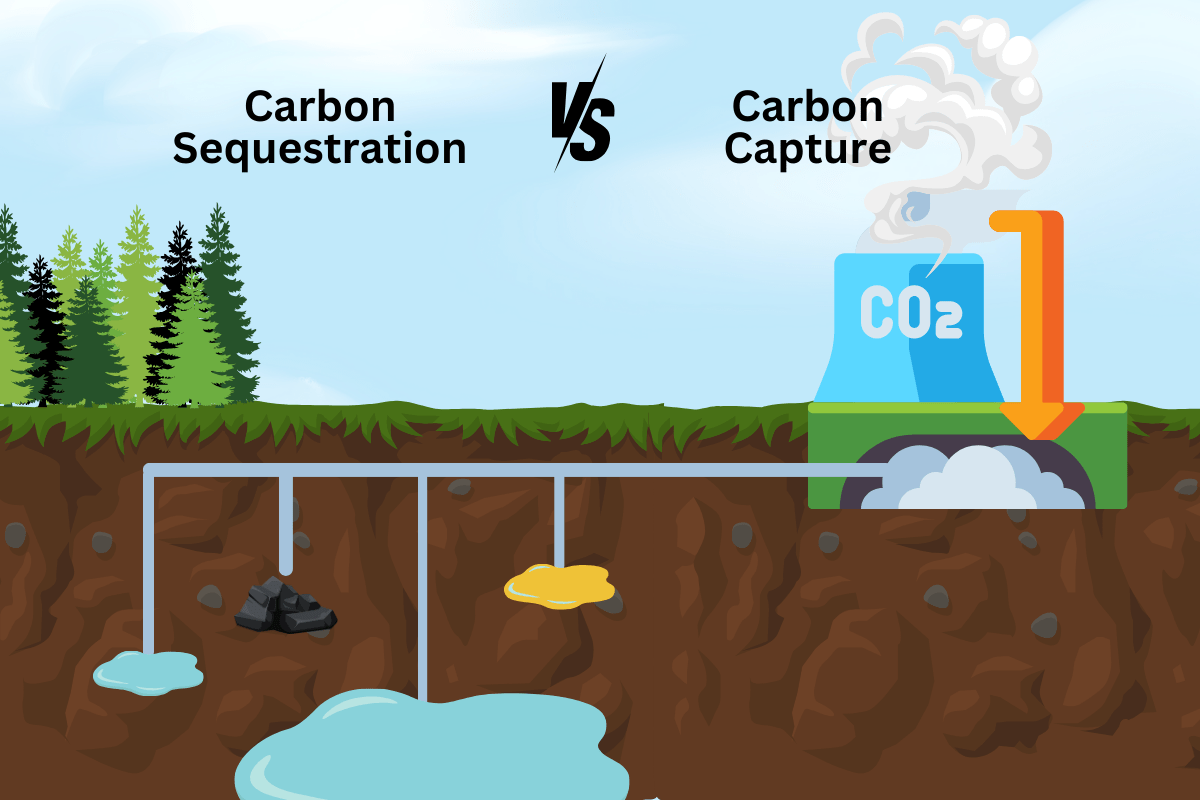
Carbon capture and sequestration (CCS) is a set of technologies that trap carbon dioxide from industrial sources and store it underground, offering a potential climate‑mitigation tool while presenting significant economic, technical, and ethical challenges.
Quick Answer
Carbon capture and sequestration (CCS) captures CO₂ emitted by power plants or heavy industry, compresses it, transports it, and injects it into deep geological formations such as depleted oil fields or saline aquifers. The Intergovernmental Panel on Climate Change (IPCC) rates CCS as a viable mitigation option for sectors where emissions are hard to eliminate, but notes that high costs, energy penalties, and long‑term storage integrity remain uncertain. In practice, CCS can reduce point‑source emissions by 70‑90 % when fully deployed, yet its net climate benefit depends on avoiding leakage and on the energy mix that powers the capture process.
Key Takeaways
- CCS captures CO₂ at the source, compresses it, and stores it in deep rock formations.
- It is most applicable to cement, steel, and fossil‑fuel power generation where low‑carbon alternatives are limited.
- High capital costs (often $50–$150 per tonne of CO₂) and energy penalties reduce overall efficiency.
- Long‑term storage security is supported by decades of oil‑field monitoring, but leakage risk cannot be ruled out.
- CCS should complement, not replace, rapid decarbonisation through renewable energy and efficiency.
What Is Carbon Capture and Sequestration Explained: Promise and Pitfalls?
Carbon capture and sequestration (CCS) refers to a suite of engineered processes that first remove CO₂ from a flue gas or industrial stream (capture) and then permanently confine the gas in subsurface reservoirs (sequestration). Capture technologies include pre‑combustion (gasification), post‑combustion (solvent scrubbing), and oxy‑fuel combustion (pure oxygen combustion). Sequestration typically uses depleted hydrocarbon reservoirs, deep saline aquifers, or basalt formations. CCS differs from carbon removal approaches such as direct air capture (DAC) because it targets point‑source emissions rather than diffuse atmospheric CO₂.
How Does It Work?
1. Capture
Flue gases are passed through a solvent (often amine‑based) or a solid sorbent that selectively binds CO₂. The CO₂‑laden medium is then heated or depressurized, releasing a concentrated CO₂ stream (usually 90–95 % purity).
2. Compression and Transport
The captured CO₂ is compressed to a supercritical state (≈7 MPa, 31 °C) to reduce volume and enable pipeline transport. Existing natural‑gas pipelines can be repurposed, or dedicated CO₂ pipelines are built.
3. Injection and Storage
High‑pressure CO₂ is injected through wells into porous rock layers capped by impermeable formations. Over time, CO₂ may dissolve in brine, react mineralogically to form stable carbonates, or remain as a buoyant plume trapped by caprock.
4. Monitoring, Verification, and Closure
Operators use seismic surveys, pressure monitoring, and chemical tracers to verify that CO₂ stays underground. After a predefined operational period, wells are sealed and long‑term stewardship continues.
What Does the Evidence Show?
Field projects documented by the International Energy Agency (IEA) and the Global CCS Institute demonstrate that CO₂ can be stored for decades without detectable leakage. The IPCC’s Sixth Assessment Report (2021) cites over 30 large‑scale CCS facilities that have collectively stored more than 200 million tonnes of CO₂, with monitoring confirming containment rates above 99 %.
Life‑cycle analyses indicate that the energy penalty for capture (typically 10–30 % of plant output) reduces net CO₂ avoidance unless low‑carbon electricity powers the capture unit. Economic assessments show that without carbon pricing above $50 /tonne, most projects are financially unattractive (IEA, 2022).
Main Causes or Drivers
Industrial Emissions
Heavy industries—cement, steel, chemicals—emit CO₂ directly from high‑temperature processes that lack low‑carbon substitutes. These sectors account for roughly 20 % of global CO₂ emissions (IEA, 2023).
Policy and Market Incentives
Carbon pricing, tax credits (e.g., U.S. 45Q), and mandatory emission limits create financial signals that can make CCS economically viable.
Technological Momentum
Existing expertise in oil‑field injection and pipeline infrastructure lowers the technical barrier for scaling CCS compared with entirely new technologies.
Environmental and Human Impacts
Environmental Impacts
When successful, CCS reduces CO₂ released to the atmosphere, mitigating climate change and associated impacts on ecosystems. However, the construction of capture plants and pipelines can disturb land, affect water resources, and emit auxiliary pollutants (e.g., NOₓ from solvent regeneration).
Human Health and Social Impacts
Workers at capture facilities may be exposed to amine solvents, which can cause respiratory irritation if not properly managed. Communities near storage sites may have concerns about induced seismicity; systematic reviews find that seismic events are rare and generally low magnitude when proper site selection criteria are applied.
Economic and Infrastructure Impacts
CCS projects require substantial upfront capital (often $1–$2 billion for a 500 MW plant) and long‑term operation contracts. They can create skilled jobs in engineering and monitoring, but may also divert investment from renewable energy development.
Regional Differences
North America and parts of Europe have the most mature regulatory frameworks and access to depleted oil fields, leading to a higher concentration of CCS pilots. In contrast, developing regions often lack the geological data and financing mechanisms needed for large‑scale storage, though emerging projects in the Middle East and Australia are exploring basalt sequestration suitable for arid climates.
What Scientists Know With High Confidence
What Scientists Know With High Confidence
- CO₂ can be stored securely for centuries in well‑characterized geological formations.
- CCS reduces point‑source CO₂ emissions when the capture unit operates as designed.
- Energy penalties and cost per tonne of CO₂ captured are significant barriers without strong policy support.
- Leakage from properly sealed storage sites is infrequent and, when it occurs, is typically less than 0.1 % of the injected volume.
What Remains Uncertain
What Remains Uncertain
Key uncertainties include the long‑term geochemical stability of CO₂ in different rock types, the scalability of capture technologies to meet gigatonne targets, and the social acceptance of large underground storage projects. Additionally, the net climate benefit of CCS integrated with fossil‑fuel power depends on future electricity mixes and carbon‑price trajectories, which remain variable across jurisdictions.
Common Misconceptions
Common Misconceptions
Misconception: CCS can replace the need for renewable energy.
Reality: CCS mitigates emissions from existing high‑carbon processes but does not eliminate the demand for low‑carbon electricity. Renewable energy remains essential for deep decarbonisation.
Misconception: Captured CO₂ disappears forever.
Reality: CO₂ is stored underground under monitoring; while leakage is rare, it is not impossible, so long‑term stewardship is required.
Misconception: All CCS projects are financially viable.
Reality: Without carbon pricing or subsidies, many projects have a cost per tonne that exceeds current market carbon values, limiting commercial deployment.
Solutions and Limitations
CCS can be part of a broader climate strategy that includes:
- Prevention: Improving energy efficiency and switching to low‑carbon fuels reduces the quantity of CO₂ that must be captured.
- Mitigation: Deploying CCS in cement and steel plants where alternatives are scarce.
- Carbon‑Removal Integration: Combining CCS with bioenergy (BECCS) offers negative emissions, but land‑use competition and biomass sustainability raise additional concerns.
Limitations include high capital costs, the need for extensive geological data, potential public opposition, and the risk of locking in fossil‑fuel infrastructure.
What Individuals, Communities, and Governments Can Do
What Individuals Can Do
Support policies that price carbon, invest in renewable energy, and fund research on low‑cost capture technologies. Reduce personal carbon footprints through energy‑efficient appliances and transportation choices, which lowers overall demand for high‑carbon energy that would require CCS.
What Communities and Organizations Can Do
Engage in local stakeholder processes for proposed storage sites, demand transparent monitoring data, and collaborate with universities to conduct site‑specific risk assessments.
What Governments Can Do
Implement clear regulatory frameworks for permitting, monitoring, and liability; provide stable carbon‑price mechanisms; fund demonstration projects; and ensure that CCS incentives do not divert resources from renewable‑energy deployment.
What Businesses and Industries Can Do
Conduct feasibility studies for CCS integration, partner with technology providers, and disclose emissions and capture performance to investors and the public.
Synthesis
Carbon capture and sequestration offers a technically proven method to trap CO₂ from the most emission‑intensive industries, providing a valuable climate‑mitigation lever when renewable alternatives are not yet feasible. High‑confidence evidence confirms that deep geological storage can retain CO₂ for centuries, yet significant uncertainties remain around cost, large‑scale deployment, and societal acceptance. Effective climate action will require CCS to complement, not replace, rapid transitions to clean energy, robust policy incentives, and transparent governance that safeguards both the environment and affected communities.
Frequently Asked Questions
What is carbon capture and sequestration (CCS)?
Carbon capture and sequestration (CCS) is a set of technologies that remove carbon dioxide from power plants or industrial processes, compress it, transport it, and inject it into deep underground rock formations for long‑term storage.
How does CCS differ from direct air capture?
CCS targets CO₂ at its source—such as a cement plant—while direct air capture pulls CO₂ directly from ambient air, requiring more energy per tonne captured.
What are the main environmental benefits of CCS?
When operating correctly, CCS can cut point‑source CO₂ emissions by 70–90 %, helping to limit global warming and reducing the carbon intensity of hard‑to‑decarbonise industries.
What are the biggest challenges to scaling up CCS?
High capital costs, energy penalties that lower plant efficiency, the need for extensive geological data, and public concerns about storage safety are the primary barriers to large‑scale CCS deployment.
Can individuals help make CCS more effective?
Individuals can support carbon‑pricing policies, advocate for transparent monitoring of storage sites, and reduce personal emissions, which together create a market where CCS can complement broader clean‑energy transitions.







Leave a Comment