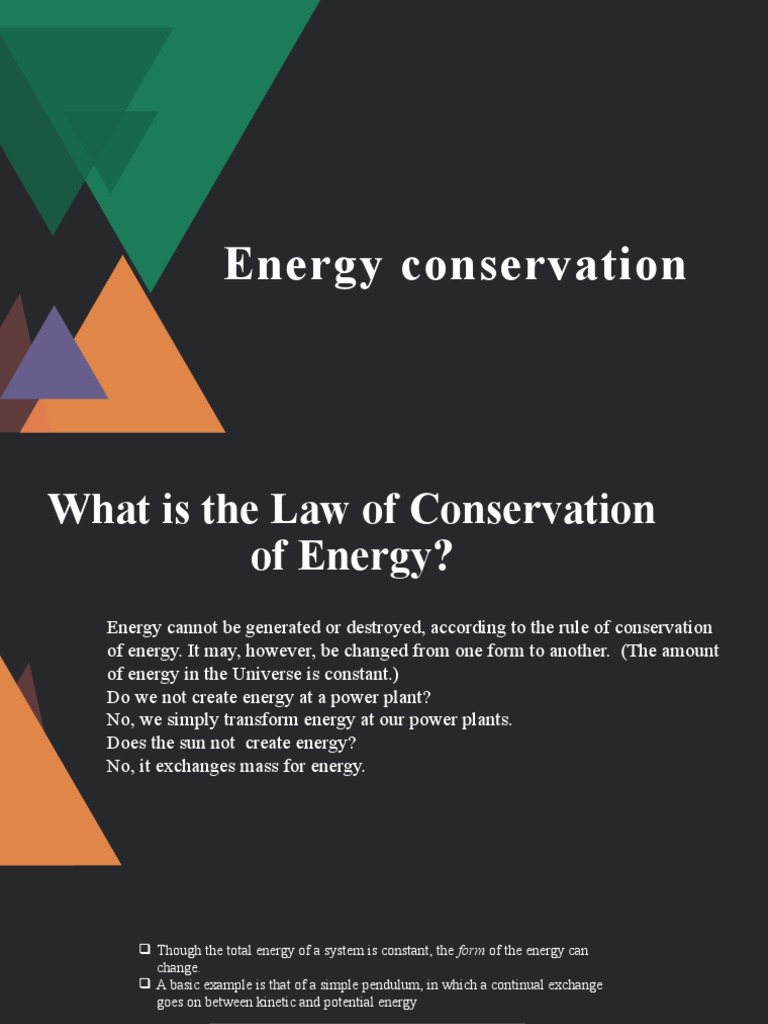
What is the conservation of energy? At its core, this principle posits a fundamental tenet of physics: energy cannot be created or destroyed; it can only transform from one form to another. This edict governs all domains of physical interaction and serves as a linchpin in various scientific disciplines, from thermodynamics to engineering and even environmental science. This article ventures beyond the surface-level understanding of energy conservation to explore its significance, applications, and implications in our lives.
To begin our exploration, it’s crucial to delineate the different forms of energy that inhabit our universe. Energy manifests in myriad forms, including kinetic energy, potential energy, thermal energy, chemical energy, and electrical energy. Kinetic energy, for instance, embodies the energy of motion, while potential energy is grounded in an object’s position or state—think of a snow-laden tree branch on the verge of collapse. Understanding these forms is elemental for grasping the nuances of energy conservation.
At a fundamental level, the law of conservation of energy indicates that within a closed system—isolated from any external influence—the total energy remains constant over time. This does not imply that energy is static; rather, it undergoes incessant conversion. Consider the case of a pendulum: at its apex, the potential energy is maximized while the kinetic energy reaches a nadir. Conversely, as it swings downwards, potential energy wanes, supplanted by an increase in kinetic energy. This seamless transfer exemplifies energy conservation in a tangible and observable manner.
Transitioning from theoretical foundation to practical implications, let us examine the significance of energy conservation in modern rigorous contexts. In an era increasingly plagued by climate change and environmental degradation, conserving energy has transcended mere scientific curiosity and has woven itself into the very fabric of sustainable development. From residential initiatives advocating for energy-efficient appliances to national policies promoting renewable energy sources, the ethos of energy conservation permeates our daily lives.
On a macroeconomic scale, the ramifications of energy conservation cannot be overstated. Industries have duly recognized the symbiotic relationship between energy efficiency and economic performance. By optimizing energy usage, companies can drastically reduce operational costs and enhance their bottom line. Moreover, energy conservation initiatives can mitigate dependence on non-renewable resources, paving the way for a more sustainable economy that is resilient to fluctuating energy prices and dwindling fossil fuel reserves.
Shifting focus to the realm of energy technology, the advances made in renewable energy exemplify the vital role of energy conservation. Harnessing solar, wind, and hydroelectric energy not only illustrates the transformative capacity of energy but also underscores the necessity of a paradigm shift in how energy is utilized. These alternative energy sources align seamlessly with the principle of conservation, as they are inherently sustainable and possess the potential to fulfill the energy demands of an ever-growing global population.
Moreover, the education and dissemination of knowledge regarding energy conservation practices are imperative for fostering a culture of environmental stewardship. Institutions and non-profits tirelessly advocate for comprehensive educational programs displaying the benefits of simple practices—such as insulating homes, utilizing energy-efficient lighting, or opting for public transport—ultimately manifesting a collective consciousness aimed at minimizing energy waste.
Another intriguing aspect of energy conservation lies in the natural world. Ecosystems, characterized by intricate interdependencies, epitomize the conservation of energy through natural cycles. In a forest, energy flows from the sun to the plants, which capture and store it via photosynthesis. Herbivores consume these plants, utilizing the stored solar energy, and subsequently, carnivores prey on herbivores, perpetuating the cycle. This biological energy transfer is not merely a textbook example; it is a vibrant reality that emphasizes the delicate balance of energy conservation intrinsic to life on Earth.
Despite its myriad benefits and critical importance, misconceptions about energy conservation persist. Some mistakenly conflate conservation with deprivation—a myopic view that undermines the achievable goals of efficiency and sustainability. In truth, energy conservation embodies innovation, resourcefulness, and the capacity for improvement. It invites individuals, organizations, and governments alike to explore advanced technologies that enhance energy efficiency and minimize waste, revealing pathways to a more sustainable future.
As we forge ahead, embracing the principle of energy conservation will be essential in surmounting the challenges of a warming planet. The myriad industries that hinge upon energy efficiency must unite in transforming their operational frameworks to prioritize sustainability. Simultaneously, individuals must cultivate awareness of their consumption patterns and make informed choices that favor conservation.
In closing, the conservation of energy is not merely an academic subject; it is an imperative that demands our attention. This principle is interwoven into the struggles we face as a global society, guiding us toward sustainable solutions that benefit both humanity and the natural world. By fostering a comprehensive understanding of energy conservation and actively participating in initiatives that promote sustainable practices, we can collectively work towards a future where energy is not merely conserved but celebrated as a cornerstone of life itself.








Leave a Comment