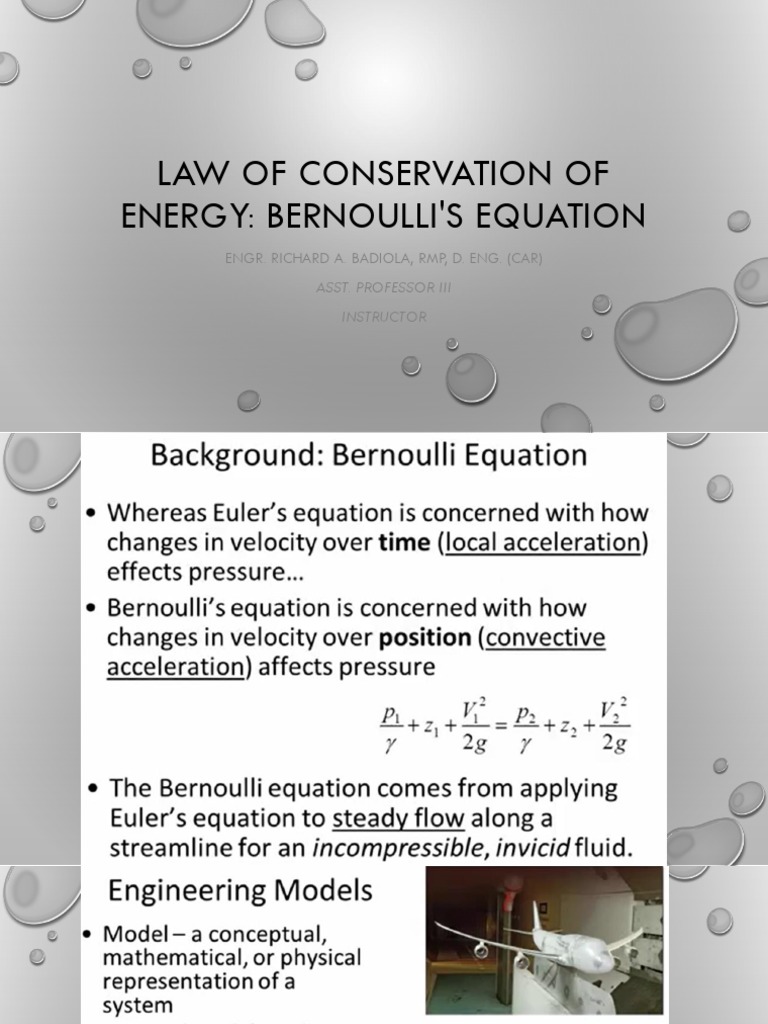
The Law of Conservation of Energy is a fundamental principle that stands as a cornerstone in the vast edifice of scientific understanding. Today, it permeates numerous fields—ranging from classical mechanics to modern physics and even the biological sciences. This phenomenon, asserting that energy cannot be created or destroyed but only transformed from one form to another, elicits profound fascination among scholars and laypersons alike. It resonates with a certain inevitability, a certainty in the chaotic flux of our environment, compelling deeper inquiry into its myriad implications.
At its core, the law is deceptively straightforward. When one considers a simple system, such as a pendulum in motion, it becomes evident that energy oscillates between kinetic and potential forms. As the pendulum swings, its maximum potential energy is achieved at the apex of its swing, while kinetic energy is maximized at the lowest point. This transformation embodies a harmonious balance, reinforcing the idea that energy is always conserved, merely changing its guise. However, the elegance of this system belies its significance. Look closer, and the intricacies reveal themselves; energy conservation is not merely a mechanical rule but a universal principle that transcends boundaries.
The implications of the Law of Conservation of Energy extend well beyond the confines of physics. In the wonderful and intricate web of ecological dynamics, energy conservation plays a crucial role. Ecosystems thrive on the delicate interplay between energy forms, particularly in the metabolic processes that sustain life. Plants harness solar energy through photosynthesis, converting sunlight into chemical energy stored in glucose. This process does not destroy energy but rather encapsulates it in a usable form, which is later consumed by herbivores and then omnivores to power their own biological functions. Thus, the energy cycles through the biosphere, illustrating a stunning example of conservation on a grand scale.
Despite the apparent simplicity of this energy-conservation paradigm, complexities arise with entropy, the second law of thermodynamics, which asserts that energy transformations are not always efficient. In any energy transaction, some energy is invariably lost as heat, leading to a gradual increase in disorder. Therefore, while the total energy remains constant, the usability of that energy can diminish over time. In societies driven by relentless consumption and extravagance, this is a silent admonition that should not be ignored. It beckons a critical examination of how humanity’s footprint impacts the world, as we are challenged to reconcile our voracious appetite for energy with the sobering realities of efficiency and sustainability.
The stark realization that energy conservation is intimately linked with ecological health brings us to explore alternative energy sources in today’s context. The modern world increasingly grapples with the implications of fossil fuel dependency, which is fundamentally at odds with the conservation principle. The extraction and combustion of fossil fuels release stored energy rapidly, but the accompanying environmental devastation raises an alarming query: at what cost do we prioritize current comforts? Renewable energy systems—solar, wind, and geothermal—embody a reconciliation between technological advancement and environmental responsibility. These systems exemplify energy conservation, not only in usage but also in fostering a sustainable path for future generations, nudging humanity towards a more balanced existence with nature.
Certainly, beyond the tangible realms of nature, energy conservation also finds footing in the philosophical dimensions of existence. The concept posits that change is an inevitable constant, akin to the transformations observed in energy forms. Life itself exemplifies this principle; individuals undergo metamorphoses shaped by experiences that accumulate much like energy within a system. In this broader interpretation, the law speaks to a unity that transcends the physical, suggesting a cosmological equilibrium that invokes a sense of wonder. It challenges the notion of creation and destruction, offering a profound reflection on continuity and interconnectedness.
In relation to cosmology, the conservation of energy integrates itself with the evolution of the universe. The Big Bang theory, which posits that the universe originated from a singular point of infinitely densely packed energy, illustrates how energy has transformed over billions of years—matter stemming from energy and vice versa. The stars, planets, and galaxies all draw upon this conservation law, revealing an intricate dance of form and formlessness that manifests across the vast cosmos. As each celestial body transforms energy through processes such as nuclear fusion, the dance of conservation continues unabated, closing the circle on humanity’s quest for understanding.
As we reflect upon the Law of Conservation of Energy today, it invites not just inquiry but requires a responsible stewardship of the Earth. The vibrant networks of life that we inhabit depend on our recognition that energy is not merely a commodity to be exploited but a vital currency that connects us with the universe itself. It serves as a reminder that each action—be it in the form of energy consumption or ecological preservation—echoes through the vast tapestry of existence. Indeed, to honor the principle of conservation is to cradle the delicate balance that sustains life, illuminating the deeper reasons behind our world’s intricate workings.
The scientific basis of the Law of Conservation of Energy extends its roots across disciplines and ages. It is a theme that resonates through time, entwining itself within the threads of the universe, inviting contemplation, responsibility, and action. Such reflections set the stage for a future that honors the balance upon which life depends, ensuring the rhythm of energy continues to pulse through the generations that follow.








Leave a Comment