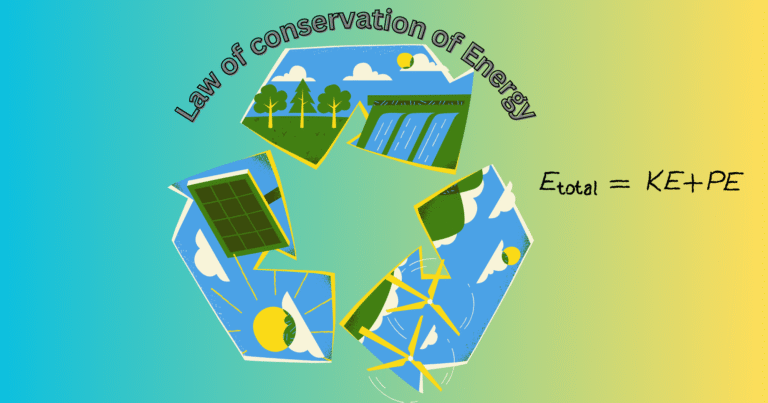
The laws of conservation of energy are quintessential in the realm of physics, shaping our understanding of the universe and guiding scientific inquiry across a multitude of disciplines. These principles assert that energy cannot be created or destroyed, but only transformed from one form to another. Scientists have painstakingly validated these laws through a plethora of experimental methods and empirical observations, which provide an unwavering foundation for this pivotal concept. This article delves into the myriad ways in which scientists prove the laws of conservation of energy, exploring the methodology and the riveting implications of their findings.
To begin with, it is crucial to define what is meant by energy in this context. Energy exists in various forms—kinetic energy is that of motion, potential energy is stored energy based on position, thermal energy relates to temperature, and so forth. Each form is interchangeable, and scientists frequently utilize these concepts to demonstrate conservation thoroughly. For instance, a quintessential example is the conversion of gravitational potential energy into kinetic energy during a free fall. A dropped object accelerates as it descends, showcasing energy transformation while maintaining the total energy constant throughout the process.
One primary method employed by scientists to empirically validate energy conservation is through experiments that measure energy transfer in closed systems. Take the exemplary case of a pendulum. As it swings, the pendulum system ingeniously converts potential energy to kinetic energy and back again. In a frictionless environment, the total mechanical energy remains constant, showcasing the laws of conservation in a clear and visually engaging manner. These experiments can be meticulously quantified using precise instruments that measure velocity, mass, and height, allowing scientists to thrall in the elegant dance of physics unspooling before their eyes.
Moreover, the advent of modern technologies has revolutionized our capacity to investigate energy transformations. For instance, calorimetry—a method specifically designed to measure heat transfer—offers profound insights into thermal processes. By carefully observing the heat generated or absorbed during chemical reactions, scientists can ascertain that energy remains conserved. If a chemical reaction in a calorimeter exhibits an increase in thermal energy, it invariably indicates that energy has been converted from one form to another, rather than being generated anew.
Beyond these classical experiments, the formulation of mathematical theories and models also substantiates the laws of conservation of energy. The foundational principles of thermodynamics—particularly the first law—serve as a cornerstone. This law outlines that the change in internal energy of a system equals the heat added to it minus the work done by the system. Formulated with mathematical rigor, these equations not only bolster our comprehension but also illuminate countless real-world applications in fields like engineering and environmental science.
The application of conservation laws also extends into various scientific fields, enriching our understanding of the universe finely. Consider astrophysics, where the conservation of energy plays an instrumental role in understanding celestial bodies and their interactions. The energy emitted by stars, for instance, can be traced back through the principles of conservation, allowing astronomers to glean information about stellar lifecycles and cosmic phenomena. Ingeniously, the concept can offer insights into the origins of the universe itself, illuminating events such as the Big Bang.
In contemporary science, computational simulations have emerged as a powerful ally in validating energy conservation. High-performance computing allows researchers to model complex systems with intricate interactions—like climate models—where energy transfers are assessed predictively. These simulations reveal the delicate interplay of energy in ecosystems, shedding light on phenomena such as energy flow in food webs and the thermodynamics of planetary climates. Such modeling provides simulations that reflect real-world applications, proving not only the conservation laws but also emphasizing their relevance in tackling pressing environmental concerns.
The laws of conservation of energy also intertwine with other fundamental scientific principles. For instance, the interplay between energy conservation and the principles of momentum conservation is notable. In elastic collisions, the total kinetic energy of the system remains constant, which affirms the interconnected nature of various physical laws. This holistic approach fosters a comprehensive understanding of physical interactions, sparking further inquiry and curiosity among scientists and laypeople alike.
The educational aspect of energy conservation is equally significant. By engaging with intuitive experiments in educational settings—like launching rockets powered by chemical reactions or constructing roller coasters that exemplify energy transformations—students can tangibly observe these principles at work. This hands-on learning fosters an appreciation for scientific inquiry and nurtures a generation that values the pursuit of knowledge and curiosity about the world around them.
Lastly, the implications of energy conservation extend far beyond academic circles. In an age where climate change and sustainable development are pressing issues, understanding energy transformations is crucial. Scientists are harnessing the laws of energy conservation to optimize renewable energy technologies, enhance energy efficiency, and create sustainable practices that respect planetary boundaries. These endeavors underscore the importance of conservation laws not merely as theoretical constructs, but as vital tools in the pursuit of a sustainable future.
In conclusion, the laws of conservation of energy are demonstrably proven through a diverse array of experimental methodologies, theoretical frameworks, and practical applications. From the elegance of a pendulum’s swing to the robust complexities of cosmic phenomena, these principles resonate throughout the fabric of physics, guiding scientists toward enriching insights. By fostering a deeper understanding of energy forms, transformations, and conservation, we equip ourselves with the necessary tools to navigate the intricate web of our universe, while addressing the multifaceted challenges of our time.









Leave a Comment