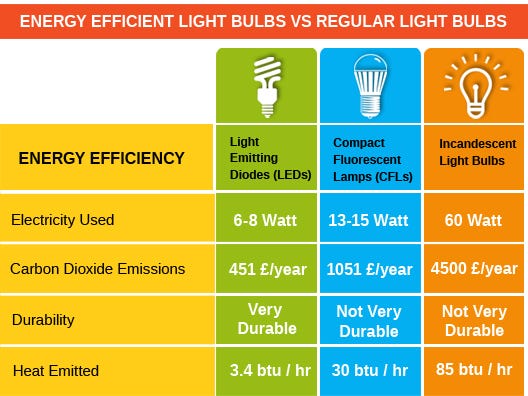
In the realm of lighting solutions, the ceaseless quest for energy efficiency and environmental sustainability has brought various technologies to the fore. Among them, halogen lights stand as a unique contender, often drawing comparisons with traditional incandescent bulbs. This article endeavors to dissect the nuanced differences between halogen lights and regular incandescent bulbs, probing the question: Are halogen lights indeed more energy-efficient than their conventional counterparts?
To embark on this exploration, it is paramount first to grasp the fundamental mechanics of how these light sources operate. Regular incandescent bulbs emit light by heating a tungsten filament until it glows. This process, while straightforward, is inherently inefficient—approximately 90% of the energy consumed is expended as heat rather than light. This not only renders them less energy-efficient but also contributes to increased energy bills for consumers.
Enter halogen bulbs, a sophisticated evolution of the traditional incandescent design. Halogen lights utilize a halogen gas within the bulb to enhance the efficiency of the filament. The halogen gas allows the filament to operate at higher temperatures, which produces a whiter and brighter light while prolonging the lifespan of the bulb. This technology effectively recycles tungsten by vaporizing it back onto the filament, a phenomenon known as the “halogen cycle.” By harnessing this process, halogen bulbs can claim a marked increase in efficacy, providing approximately 30% more lumens per watt than traditional incandescent lights.
While the operating principle highlights halogen bulbs as a compelling alternative, energy efficiency cannot be solely attributed to lumens per watt. A comprehensive analysis requires delving into the long-term implications of both bulb types regarding energy consumption, lifespan, and environmental impact.
Let’s consider energy consumption first. On average, a 100-watt incandescent bulb provides around 1600 lumens. In contrast, a 100-watt halogen bulb generates a similar luminosity while utilizing significantly less energy—approximately 72 watts. This difference translates into considerable savings over time. For households opting for halogen lighting, the potential for reduced energy bills is an enticing prospect.
Next, we must examine the complementary issue of lifespan. Traditional incandescent bulbs typically boast a lifespan of about 1,000 hours. In contrast, halogen bulbs can last anywhere from 2,000 to 4,000 hours due to their enhanced thermal efficiency and the halogen cycle. This longevity does not merely imply that consumers will replace bulbs less frequently; it also exacerbates the initial cost of purchasing incandescent bulbs, making halogens a preferable investment in the long run.
Environmental concerns also loom large in the discussion of energy efficiency. As the world grapples with the immediate threats posed by climate change, the ecological footprint of lighting solutions becomes crucial. Halogen bulbs generate less waste in the form of discarded bulbs due to their extended lifespan. Furthermore, their greater efficiency results in reduced reliance on fossil fuels for electricity generation, consequently minimizing greenhouse gas emissions. The impact on the environment from switching to halogen lighting is thus profound.
It is essential to acknowledge, however, that halogen bulbs are not without their detractors. Critics often point to their heat generation as a significant drawback. Despite their efficiency over incandescent bulbs, halogens still produce heat, which can be a safety concern, particularly in enclosed spaces or fixtures not designed for high temperatures. This aspect necessitates careful consideration during installation and usage, as it can lead to fire hazards when not managed correctly.
Moreover, the emergence of LED alternatives has further complicated the conversation surrounding halogen and incandescent bulbs. LED technology, which stands at the pinnacle of energy efficiency, typically uses a fraction of the power of both halogen and incandescent bulbs while boasting lifespans upwards of 25,000 hours. The results are staggering; LEDs convert about 80-90% of their energy into light, presenting a formidable challenge to the halogen narrative.
Thus, as the lighting landscape continues to evolve, one must ponder whether halogen bulbs serve more as a bridge than a destination in the journey towards sustainable lighting. They offer clarity, brightness, and energy efficiency compared to incandescent bulbs, but they might not be a long-term solution in a world moving towards innovative technologies such as LEDs.
In conclusion, halogen lights offer a transitional energy-efficient solution between traditional incandescent bulbs and the emerging dominance of LED technology. They embody a commitment to improving energy efficiency while delivering superior luminosity compared to their incandescent predecessors. However, the overarching trend toward LED lighting urges consumers to consider their long-term energy solutions further. Those who seek to illuminate their homes or workplaces with efficiency would do well to weigh the unique benefits of each lighting option, keeping in mind not only immediate costs but also future energy bills, environmental impact, and personal safety.
In this age of rapidly evolving technology, the question persists: Are halogen lights merely efficient lights of yesterday, or do they represent an enlightened path towards a sustainable future before the ultimate triumph of LEDs? The choice ultimately lies in the hands of the consumer, who must navigate the labyrinth of options while holding steadfast to the illuminating quest for efficiency and ecological responsibility.






Leave a Comment