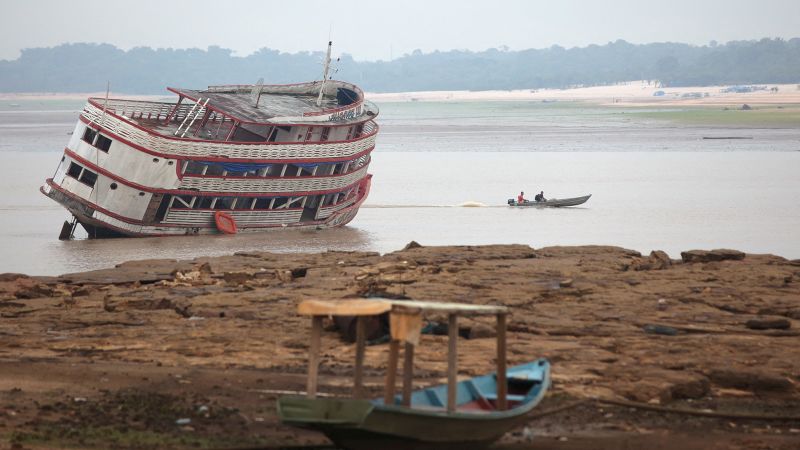
The Amazon River, often celebrated as the lifeblood of the rainforest it traverses, recently plunged to its lowest recorded level in 121 years. This alarming phenomenon signals not merely a momentary environmental aberration but rather an unfolding narrative of climatic distress. Situated primarily in Brazil, the Amazon represents a mosaic of biodiversity; it is both an ecological paradise and a crucial regulator of our planet’s climate. However, this delicate balance has been disrupted by an intricate tapestry of factors, prompting an urgent examination of the circumstances surrounding the river’s depletion and its broader implications.
The immediate cause of the river’s diminutive state stems from a protracted drought that has gripped the region. Climatic fluctuations, exacerbated by anthropogenic influences, have lowered precipitation rates significantly. The Amazon rainforest, once perceived as an impregnable bastion against the vagaries of nature, now reveals an unsettling vulnerability to extended periods of drought. This extreme weather event, which is becoming alarmingly recurrent, manifests in diminished rainfall, rising temperatures, and increased evaporation. The cyclical nature of these droughts can have catastrophic effects not only on the river’s flow but also on the intricate ecosystems that depend on its waters.
The ramifications of the Amazon River’s declining levels extend well beyond the immediate ecological impacts. Indigenous communities, who have thrived alongside the river for centuries, face existential challenges as their water sources dwindle. These groups harbor a profound connection to the land, viewing the river not merely as a waterway, but as an integral part of their cultural identity and heritage. As the river recedes, so too does their access to food, shelter, and traditional practices. The loss of fish populations, a primary food source for many indigenous tribes, remarkably alters their way of life. This degradation serves as a poignant reminder of the inextricable link between environmental health and human communities.
Moreover, the dwindling volume of water in the Amazon poses significant threats to global climate stability. The Amazon rainforest is often described as the “lungs of the Earth,” owing to its capacity to sequester vast amounts of carbon dioxide. However, as the river’s flow diminishes, it incites a cascade of repercussions. The trees, deprived of adequate hydration, become less resilient to disease and are more susceptible to wildfires. These fires, a byproduct of drier conditions, release stored carbon back into the atmosphere, thereby exacerbating the very climate crisis they are a response to. As the balance of this vital ecosystem falters, the reverberations are felt worldwide, with rising global temperatures becoming an even more imminent threat.
Geopolitically, the challenges posed by the Amazon River’s historic low levels may usher in an era of territorial conflict over water resources. As communities scramble to secure their share of dwindling supplies, tensions could rise, igniting disputes that threaten to destabilize the region further. The complex interplay of politics, economics, and environmental stewardship necessitates careful maneuvering. Policymakers must grapple with the urgent need for sustainable water management and equitable resource distribution, lest we succumb to the anarchic chaos birthed from desperation.
The implications of this environmental crisis are profound, and hence, the need for concerted action becomes more pronounced. Solutions must extend beyond the immediate. Preservation efforts must be recalibrated to address the root causes of such climatic events, emphasizing reforestation, sustainable agricultural practices, and indigenous stewardship of the land. The integration of traditional ecological knowledge—harnessing the wisdom of those who have long protected the land—can offer innovative approaches to combat this crisis while ensuring cultural practices are honored.
While the situation appears dire, the Amazon River’s descent into unprecedented lows can catalyze a collective awakening. This could potentially rally environmental activists, scientists, policymakers, and ordinary citizens alike to prioritize the conservation of not just the Amazon, but the imperative principles of sustainability that govern our shared existence. By acknowledging the intricate web of life that the Amazon supports, humans can be motivated to act. After all, when a vital artery of our planet’s ecosystem spirals into distress, it is a clarion call for change, urging us to confront the uncomfortable truths that fuel environmental degradation.
In conclusion, the historic low of the Amazon River amidst Brazil’s worsening drought is not a standalone issue. It intertwines with a multitude of deeper ecological, sociopolitical, and economic narratives that collectively underscore the fragility of our planet. It demands an introspective look at our relationship with nature, compels us to reconsider our prioritization of resources, and reinforces the notion that the fate of the Amazon inevitably reflects the choices humanity makes. As the river grapples with its lowest depths, it has become a poignant symbol of the broader environmental challenges that lie ahead. Emerging from this crisis could be the resolve to invoke change, lest we witness the irreversible decline of one of the Earth’s most vital ecosystems.






Leave a Comment