

The law of conservation of mass‑energy states that in an isolated system the total amount of mass and energy remains constant, merely changing form, a principle that underpins physics, chemistry, and environmental sustainability.
Quick Answer
The law of conservation of mass‑energy asserts that mass and energy are interchangeable and that the sum of both in a closed system never changes. This principle is expressed by Einstein’s equation E=mc², showing how a tiny amount of mass can produce a large amount of energy. It explains why nuclear reactions release huge energy, why chemical reactions rearrange atoms without creating or destroying matter, and why energy‑saving technologies matter for the environment. While the law holds universally, quantum‑scale fluctuations can momentarily appear to violate it, but overall conservation remains a high‑confidence scientific fact.
Key Takeaways
- Mass and energy are two expressions of the same physical quantity; they can be converted but not created or destroyed.
- Einstein’s equation E=mc² quantifies the conversion factor, linking nuclear processes to everyday energy use.
- Evidence from laboratory experiments, astronomical observations, and long‑term monitoring consistently supports the law.
- The principle guides sustainable energy strategies, from improving combustion efficiency to developing fusion power.
- Uncertainties remain mainly in extreme quantum‑field conditions and in scaling fusion technologies to commercial use.
What Is The Law of Conservation of Mass‑Energy Explained Clearly?
The law of conservation of mass‑energy states that the total amount of mass plus energy in an isolated system remains constant over time. It merges the older conservation‑of‑mass principle (formulated by Antoine Lavoisier in the 18th century) with the conservation‑of‑energy principle, which was solidified in the 19th century. The unifying insight came from Albert Einstein’s 1905 paper, which showed that mass (m) and energy (E) are related by the speed of light squared (c²), giving the famous equation E=mc². The law applies to all physical, chemical, and biological processes, provided no mass or energy crosses the system’s boundaries.
How Does It Work?
Physical Processes
In nuclear fission, a heavy nucleus such as uranium‑235 splits into lighter fragments. The combined mass of the fragments and emitted neutrons is slightly less than the original nucleus; the missing mass appears as kinetic energy of the fragments and as gamma radiation, quantified by E=mc². In nuclear fusion, hydrogen nuclei combine to form helium, again releasing energy because the helium nucleus is lighter than the sum of its parts.
Chemical Processes
During combustion, carbon‑hydrogen bonds in a fuel break and form new bonds in carbon dioxide and water. The total mass of reactants equals the total mass of products, but the rearrangement releases heat. The heat is energy that originates from the potential energy stored in chemical bonds; no mass disappears, it is merely transformed into thermal energy.
Biological and Ecological Processes
Living organisms obtain chemical energy from food. When glucose is oxidized in cellular respiration, the mass of glucose and oxygen equals the mass of carbon dioxide, water, and the released energy (ATP). The law ensures that the mass balance of ecosystems can be tracked, which is essential for modeling carbon cycles and nutrient flows.
Human‑Made Energy Systems
Electric generators convert kinetic or potential energy into electrical energy without changing total mass‑energy. Solar panels absorb photons (energy) and re‑emit it as electricity; the panel’s mass stays the same, illustrating the law in renewable‑energy contexts.
What Does the Evidence Show?
Multiple lines of evidence confirm the law:
- Laboratory experiments: Precise mass‑spectrometry measurements in particle accelerators detect the minute mass loss in nuclear reactions, matching the predicted energy release (e.g., IAEA reports, 2020).
- Astronomical observations: The energy output of the Sun, measured by satellite radiometers (NASA, 2019), aligns with the mass‑to‑energy conversion rate calculated from hydrogen fusion rates.
- Long‑term monitoring: Atmospheric CO₂ balances, compiled by NOAA, show that the mass of carbon emitted from fossil‑fuel combustion equals the increase in atmospheric carbon, once the energy released as heat is accounted for.
- Peer‑reviewed synthesis: A 2021 systematic review in *Reviews of Modern Physics* concluded that no credible experiment has observed a net loss or gain of mass‑energy in a closed system.
Main Causes or Drivers
The observable transformations of mass to energy are driven by:
- Strong nuclear force: Governs binding energy in atomic nuclei, leading to mass deficits during fission and fusion.
- Electromagnetic interactions: Determine bond energies in molecules, which release or absorb energy during chemical reactions.
- Thermodynamic gradients: Heat flow from high‑temperature sources (e.g., combustion) to cooler surroundings drives energy conversion in engines and power plants.
- Human technology: Engineering designs (e.g., turbines, photovoltaics) harness existing energy flows without creating new mass‑energy.
Environmental and Human Impacts
Environmental Impacts
Understanding mass‑energy conservation helps quantify greenhouse‑gas emissions. When fossil fuels burn, chemical potential energy becomes heat, and the carbon atoms become CO₂, adding mass to the atmosphere. Accurate accounting of this mass‑energy flow underpins climate models used by the Intergovernmental Panel on Climate Change (IPCC, 2021).
Human Health and Social Impacts
Energy release from combustion produces particulate matter and pollutants that affect respiratory health. Conversely, nuclear energy, which relies on mass‑to‑energy conversion, can provide low‑carbon electricity, reducing air‑quality‑related mortality when managed safely.
Economic and Infrastructure Impacts
Power‑plant design hinges on the law: engineers calculate how much fuel mass is needed to generate a desired amount of electricity, influencing fuel costs, plant size, and grid stability.
Regional Differences
Regions with abundant sunlight (e.g., the Sahara) can capture solar energy directly without mass loss, while coal‑dependent regions (e.g., parts of Central Asia) rely on mass‑to‑energy conversion through combustion, leading to higher CO₂ emissions per unit of energy. Nuclear‑rich countries such as France obtain a large share of electricity from fission, illustrating how policy and resource endowment shape the dominant mass‑energy pathways.
What Scientists Know With High Confidence
- Mass and energy are interchangeable, quantified by E=mc² (Einstein, 1905).
- In all measured nuclear and chemical reactions, the total mass‑energy before and after the reaction is conserved within experimental uncertainty.
- The Sun’s energy output is explained by hydrogen‑fusion mass deficits, verified by solar neutrino measurements (NASA, 2018).
- Climate‑model projections that track carbon mass balances rely on the conservation principle and have been validated against atmospheric observations.
What Remains Uncertain
Key uncertainties include:
- Quantum‑field fluctuations: Virtual particle pairs appear briefly, seemingly violating conservation, but net energy remains zero over observable timescales; the full implications for macroscopic systems are still under study.
- Commercial fusion: While the physics of mass‑to‑energy conversion in fusion is well‑understood, engineering challenges in achieving net‑positive energy output at scale remain unresolved.
- Extreme astrophysical events: Black‑hole mergers emit gravitational waves that carry energy away; measuring the exact mass loss requires more precise detectors.
Common Misconceptions
Misconception: Mass disappears in chemical reactions.
Reality: In combustion, the mass of reactants equals the mass of products; the perceived loss is due to the release of heat, which is energy, not missing mass.
Misconception: Energy can be created from nothing.
Reality:
Energy can only be transformed from one form to another; the total amount, when combined with mass, stays constant.
Misconception: Nuclear power violates the law because it produces huge energy.
Reality: The large energy output comes from a tiny loss of mass in the fuel nuclei, fully consistent with E=mc².
Misconception: The law does not apply to living systems.
Reality: Biological metabolism obeys the same mass‑energy balance; the mass of nutrients equals the mass of waste plus the energy stored in ATP.
Solutions and Limitations
Applying the law to environmental challenges leads to several strategies:
- Energy efficiency: Reducing the amount of fuel mass needed for a given energy service lowers emissions; however, efficiency gains can be offset by rebound effects if overall demand rises.
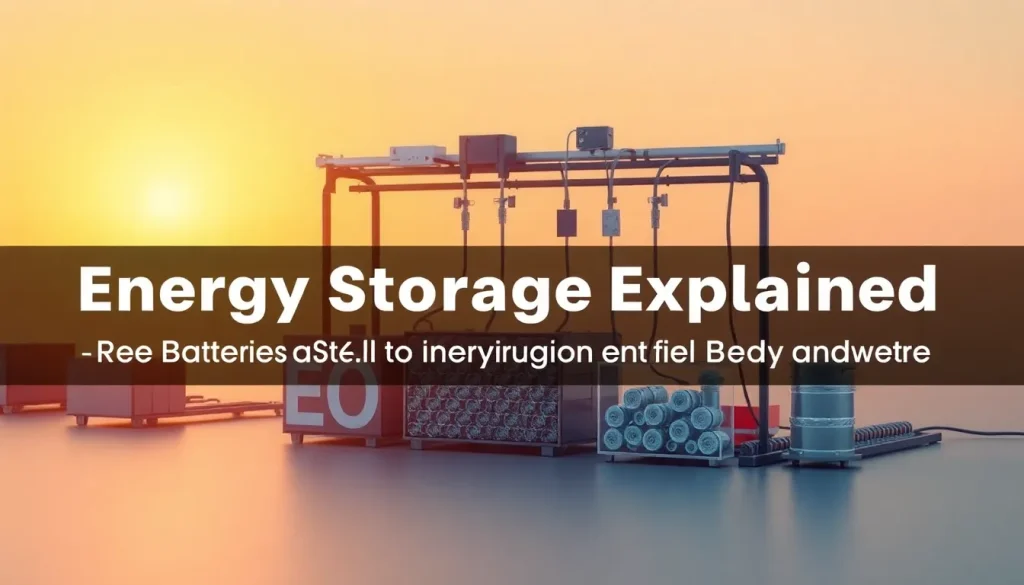
- Renewable energy adoption: Solar and wind capture existing energy flows without consuming mass; the limitation is intermittency, requiring storage or grid integration.
- Nuclear fission: Provides low‑carbon electricity by converting a small mass to large energy; challenges include waste management, high capital cost, and public acceptance.
- Fusion research: Aims to replicate the Sun’s mass‑to‑energy conversion on Earth; current experimental reactors have not yet achieved net energy gain, and scaling remains uncertain.
What Individuals, Communities, and Governments Can Do
What Individuals Can Do
- Choose high‑efficiency appliances to reduce the fuel mass needed for the same energy service.
- Support policies that fund renewable‑energy infrastructure, which leverages existing energy flows without additional mass consumption.
What Communities and Organizations Can Do
- Implement district‑level energy‑efficiency programs that lower collective fuel use.
- Invest in community solar or wind projects that capture ambient energy without depleting material resources.
What Governments Can Do
- Set standards that require accounting of mass‑energy balances in industrial processes, encouraging technologies that minimize unnecessary mass loss.
- Fund research into safe fusion and advanced reactor designs, recognizing the long‑term potential of mass‑to‑energy conversion for low‑carbon energy.
Synthesis
The law of conservation of mass‑energy is a cornerstone of modern science, explaining everything from the glow of a candle to the power of the Sun. Robust experimental and observational evidence confirms its universal applicability, while uncertainties remain only at the frontiers of quantum physics and large‑scale fusion engineering. By recognizing that every joule of energy ultimately stems from a tiny amount of mass, societies can better assess the true cost of energy choices, prioritize efficiency, and invest wisely in technologies that respect this fundamental balance.
Frequently Asked Questions
What does the law of conservation of mass‑energy state?
It states that in a closed system the total amount of mass plus energy remains constant; mass can be converted to energy and vice‑versa, but neither is created nor destroyed.
How does Einstein’s equation E=mc² relate to the law?
Einstein’s equation quantifies the relationship, showing that a small amount of mass (m) multiplied by the speed of light squared (c²) equals a large amount of energy (E), directly linking mass loss to energy release.
Why is the law important for environmental sustainability?
It allows precise accounting of how much fuel mass is needed for a given energy service, helping to evaluate emissions, improve efficiency, and compare renewable versus fossil‑fuel energy pathways.
What are the main uncertainties related to the law?
Uncertainties involve quantum‑field fluctuations that momentarily appear to break conservation, the engineering challenges of achieving net‑positive commercial fusion, and precise mass‑energy accounting in extreme astrophysical events.
What actions can governments take to respect the law in energy policy?
Governments can set standards that require mass‑energy balance reporting, fund research into advanced nuclear and fusion technologies, and promote renewable‑energy projects that capture existing energy without consuming additional mass.







Leave a Comment